Before You Learn About Bitcoin
Monetary History
The search for a form of money that holds its value across TIME and DISTANCE is older than recorded states. Most attempts have failed. The record is one of debasement, clipping, hyperinflation, and confiscation. Bitcoin is the first system to solve the problem without a central issuer.






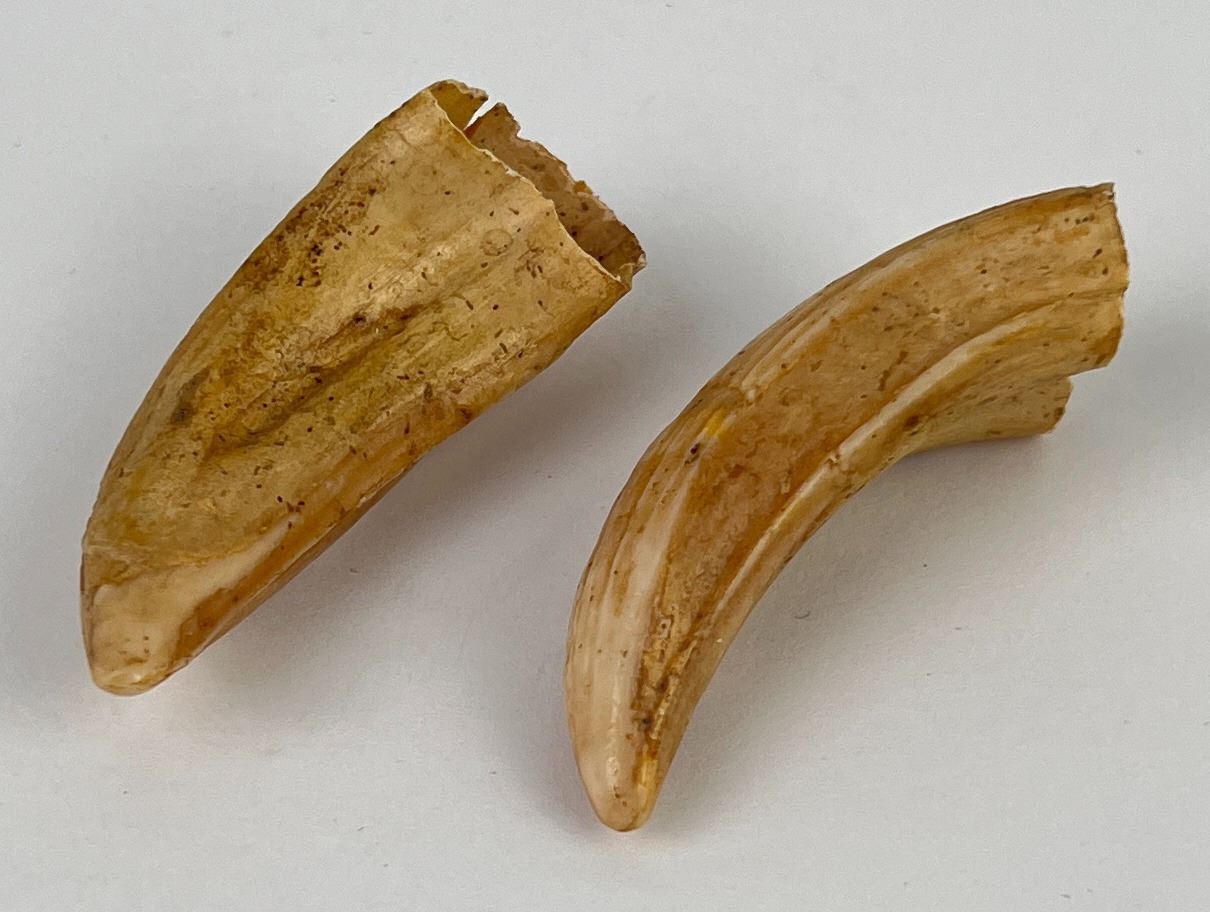



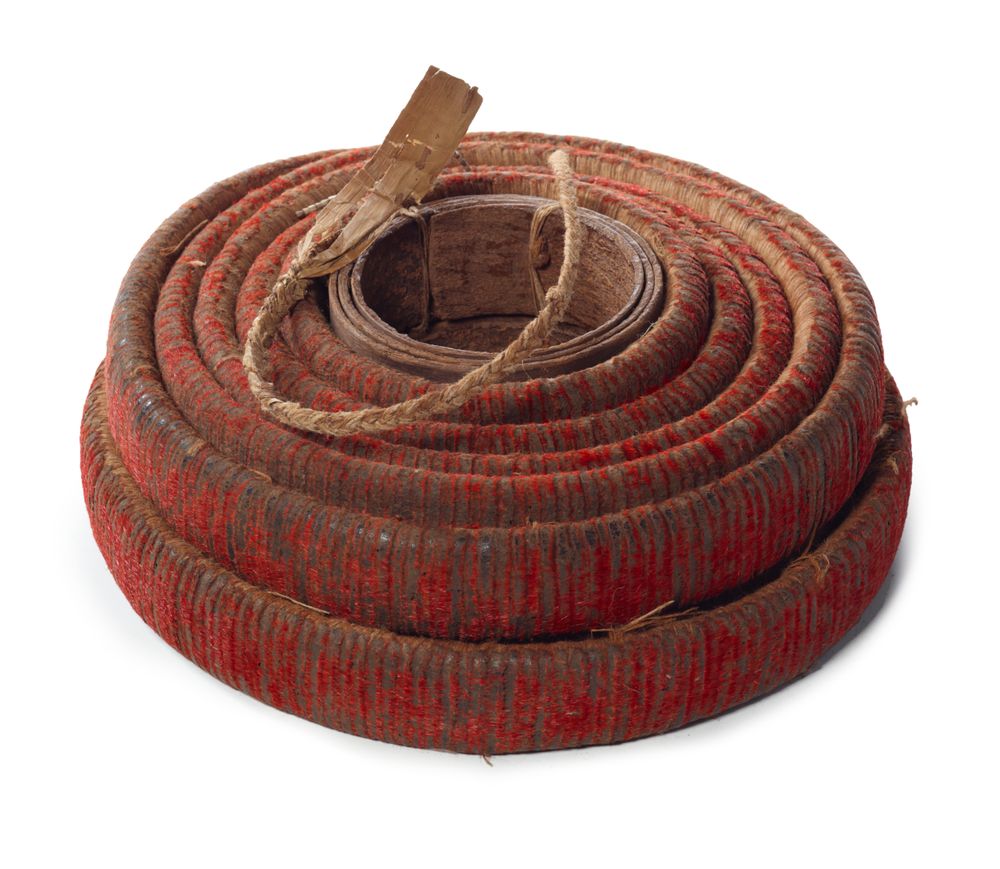
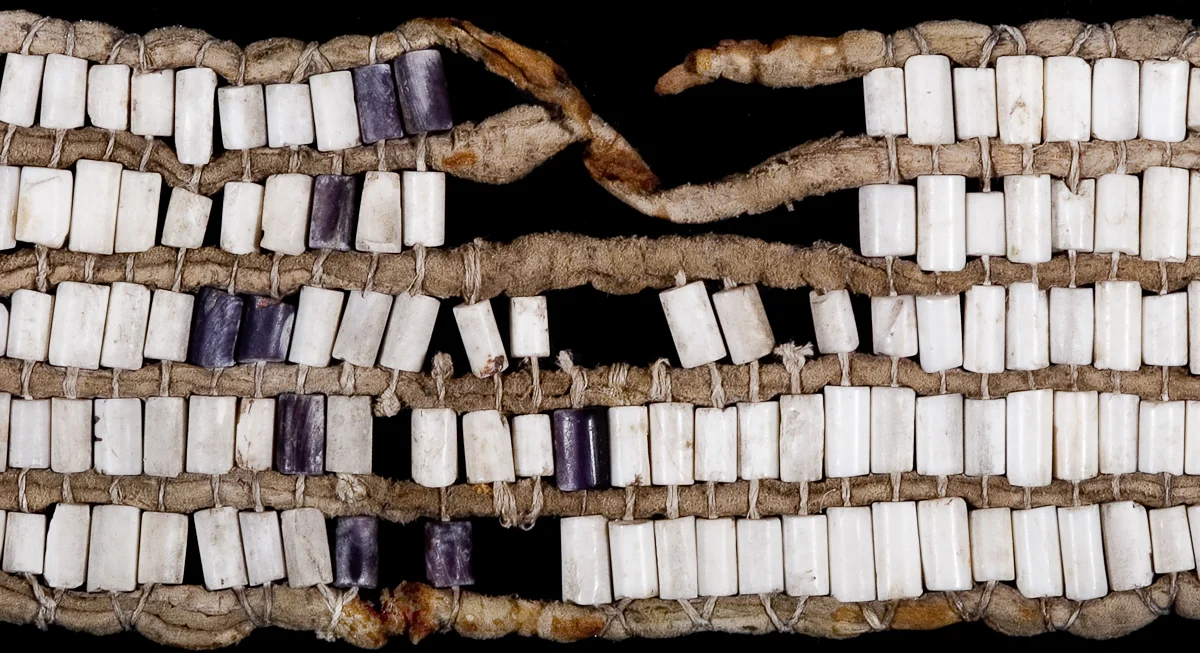



First Money: Cattle, Sheep, & Goats
Cattle are among the earliest recorded forms of money. With the domestication of animals circa 9000 - 6000 BCE in the Fertile Crescent and elsewhere, these animals became a practical standard of value in many early societies. In pastoral societies they served as a; UNIT OF ACCOUNT, a STORE OF VALUE, and a MEDIUM OF EXCHANGE for large transfers such as bridewealth and compensation. The Old English word “fee” traces back to terms for livestock, and the Latin word “pecunia” translated to "money" from cattle, "pecus and pecuniary". In addition, the word "Capital" traces back to "capita" or "heads of cattle" from early agricultural societies. Cattle worked as money where herds were the primary form of wealth, but they were costly to transport, difficult to divide, and vulnerable to disease and theft. Later monies improved on these constraints.
Ancient China: Commodity Money
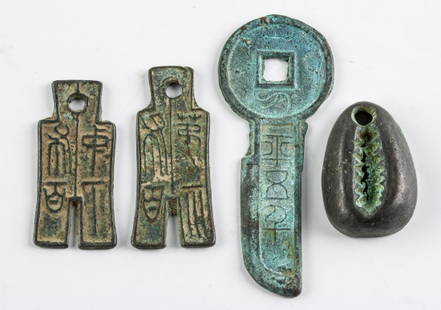
In the late Neolithic and early Bronze Age, cowrie shells and later imitation shells functioned as stores of value and media of exchange along trade routes. By the Shang and Zhou periods, standardized bronze objects—spades, knives, and later round coins—served as both medium of exchange and unit of account. These early forms derived value from the metal itself and from official marks that indicated weight or issuing authority. Grain and silk also appear in records as units for taxation and large transfers. The system worked where the issuing authority maintained consistent weight and where counterfeiting remained costly.
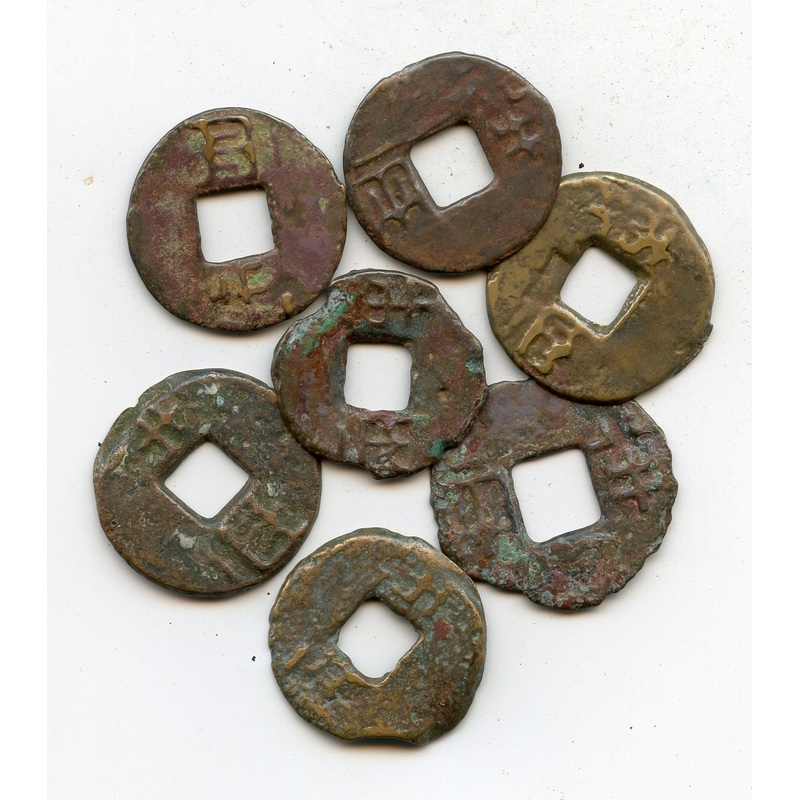
The Qin and Han dynasties centralized coinage. The Ban Liang and later Wu Zhu coins established a round coin with a square hole as the standard form. State mints controlled production. For extended periods the coins circulated widely and supported internal trade and tax collection. The high point was a relatively stable copper coinage backed by administrative capacity. When that capacity weakened—during periods of fragmentation or heavy military expenditure—mints reduced weight or increased output. Prices rose. Private casting increased. The same coin form that had been a reliable unit became a vehicle for debasement.
Later dynasties repeated the pattern. Wang Mang’s reforms in the first century CE introduced multiple denominations and new shapes; most failed within years. Tang and Song issues expanded the money supply to finance administration and defense. Paper money appeared under the Song as a claim on coin or goods held by the state. Early issues were limited and convertible. Later issues were not. By the Southern Song and Yuan periods, excessive paper issuance produced inflation severe enough to undermine the instrument. The Ming and Qing governments alternated between copper coinage, silver by weight, and occasional paper experiments. Silver imported through trade became a major store of value precisely because it was not under exclusive domestic mint control.
Across these centuries the commodity—copper, silver, or grain—could function as money when its supply was difficult to expand quickly. Failure occurred at the level of the issuing authority. Dynasties debased coinage or expanded paper to meet immediate fiscal needs, most often war or administrative cost. Once the public observed that the mark or the paper no longer corresponded to a stable quantity of metal or goods, acceptance fell. Counterfeiting rose where the official standard weakened. The recurring outcome was the same: a monetary instrument that depended on central restraint was altered when restraint conflicted with the issuer’s short-term requirements. The brand of the dynasty and the credibility of its mint were the points of failure, not the underlying metal or grain.
Ancient Egypt: Commodity Money
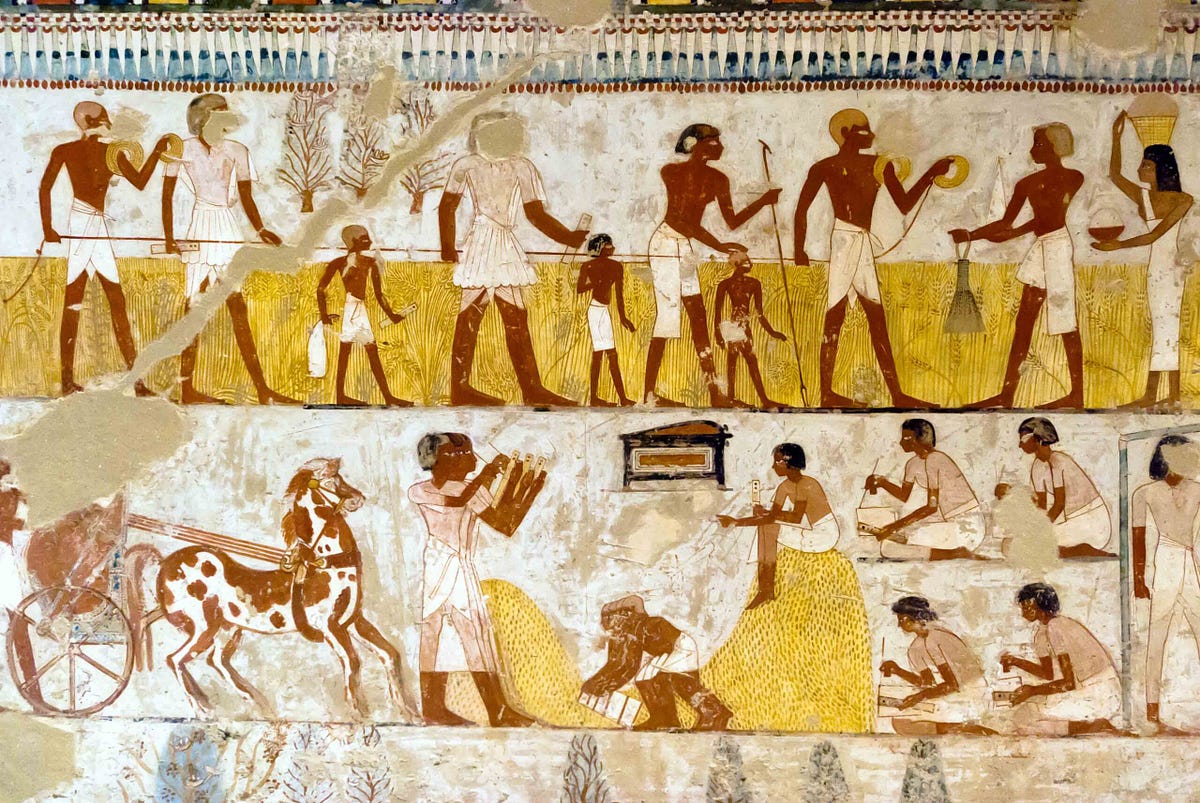
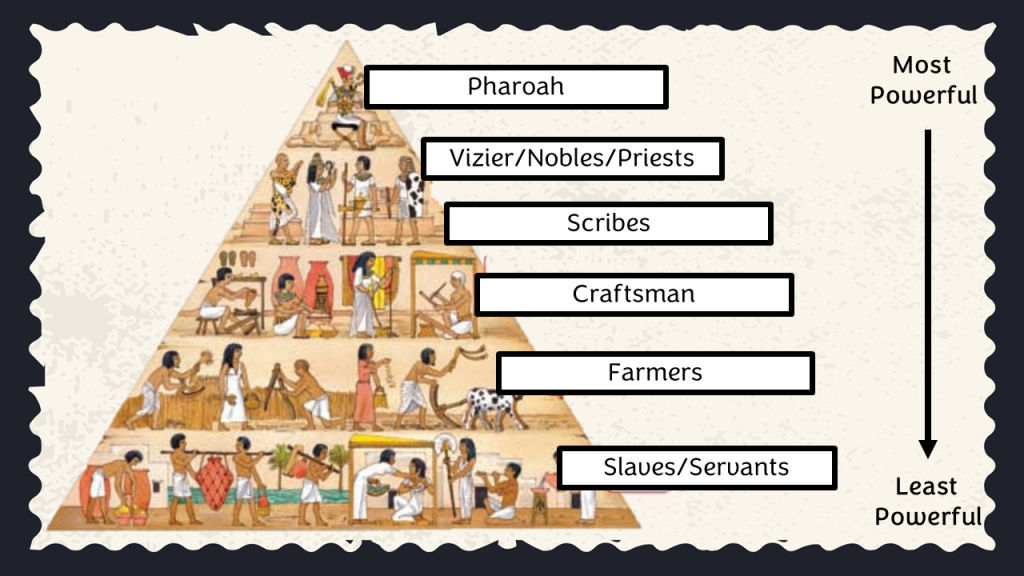
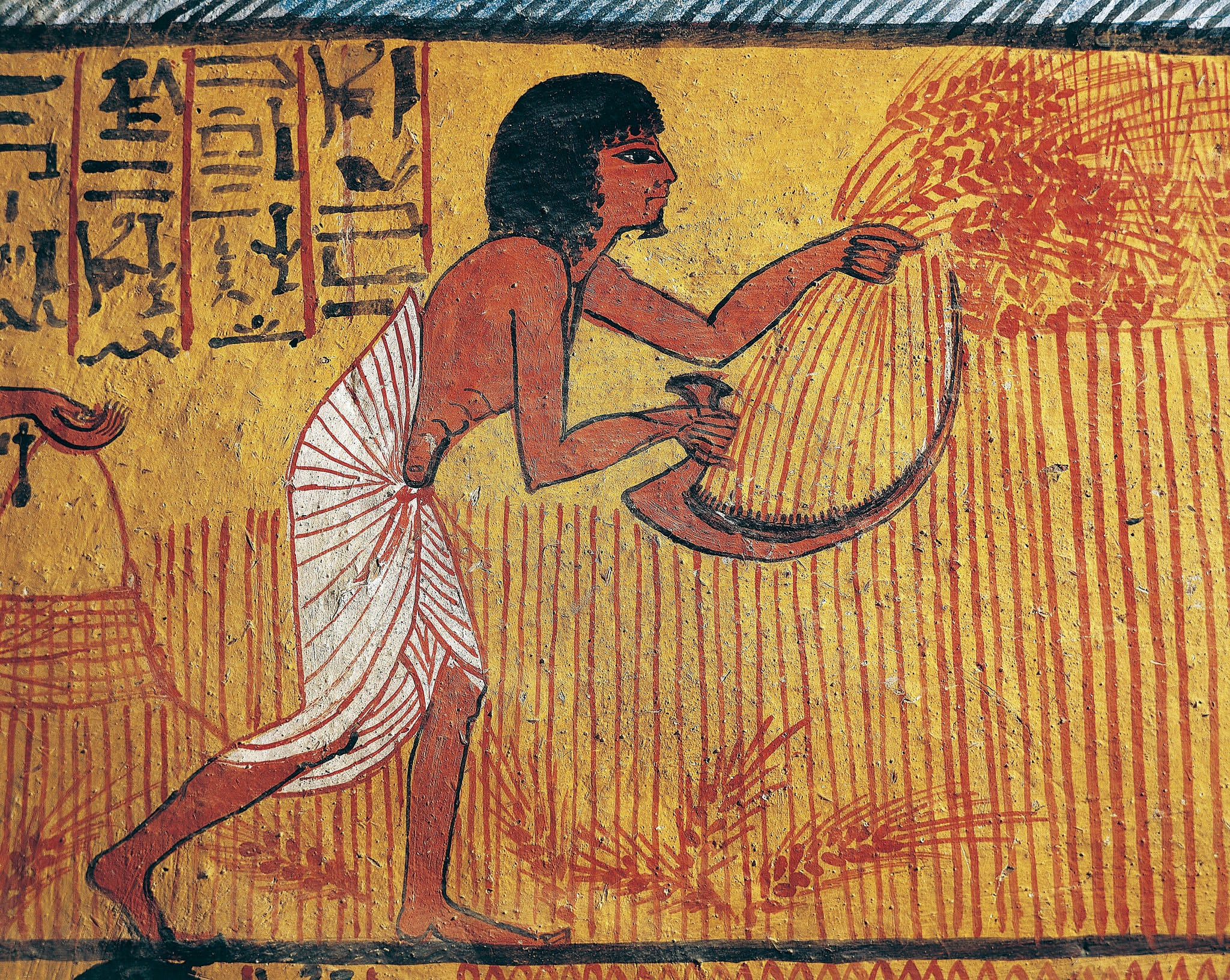


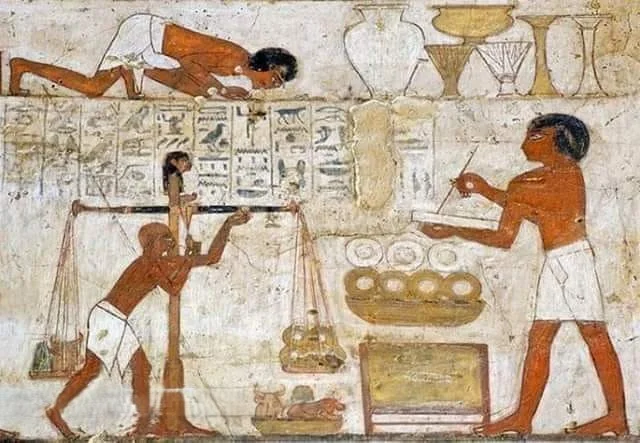

3500 BCE: In the pre-dynastic and early dynastic periods Egypt did not use coined money. Value was expressed through commodities that were durable, divisible, and widely desired. Grain, especially barley and emmer wheat, functioned as a unit of account in administrative records. Oil and Linen were also used. Copper and later gold and silver served as stores of value and as media for larger transfers. Weights of metal and measures of grain appear in tomb inscriptions and palace accounts as early as the Old Kingdom. These were not tokens; they were the goods themselves, standardized by weight or volume so that obligations could be calculated and settled.
Standardized Measurement: The Deben System
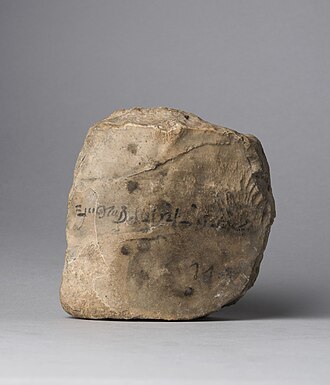
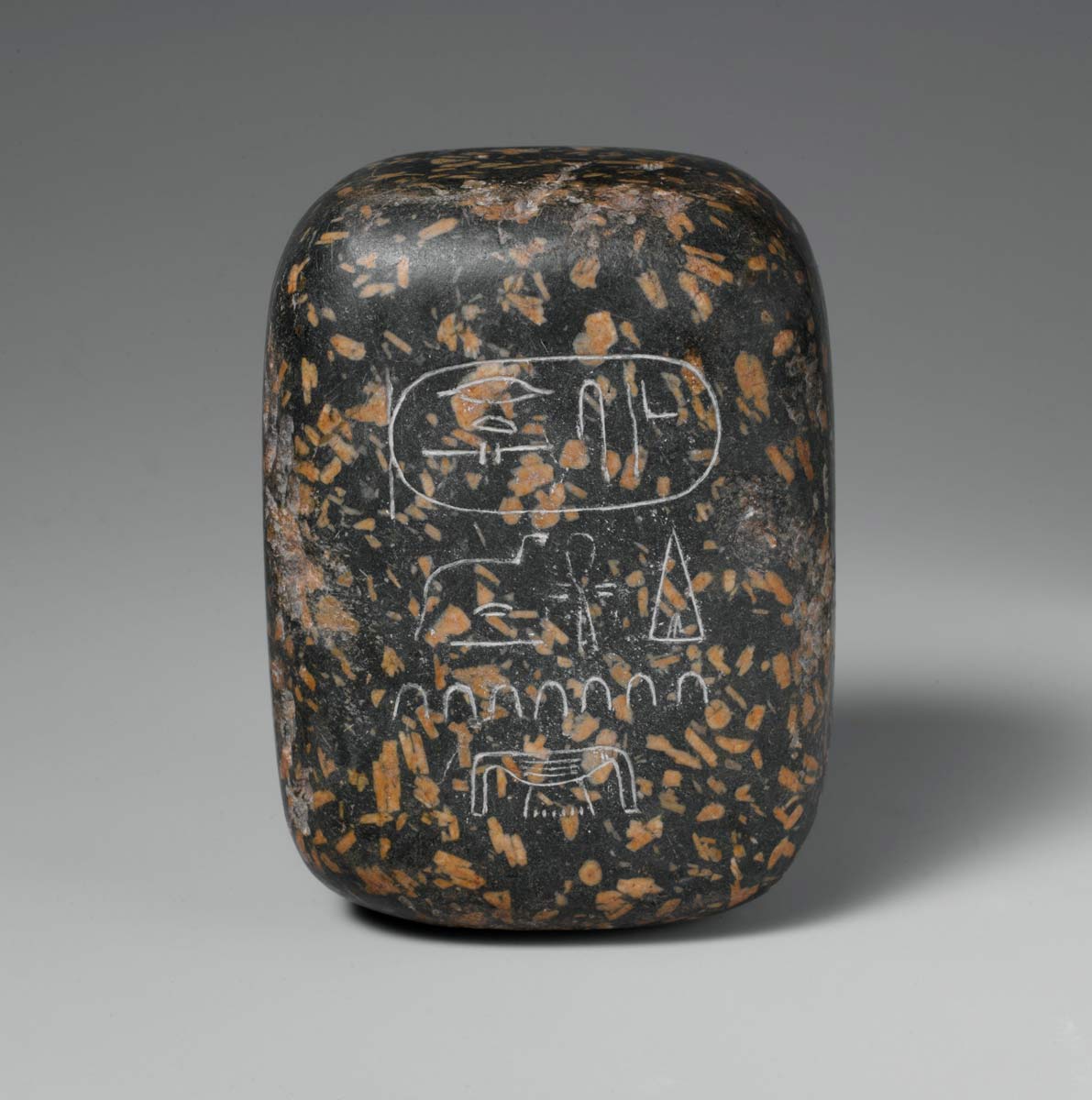
By the Middle and New Kingdoms the state maintained detailed records of grain deliveries, metal weights, and labor obligations. A deben of copper or a measure of grain could be used to value cattle, land, or services. Slaves and free workers received rations denominated in these units. The system allowed the palace and temple economies to coordinate large-scale projects and to collect taxes in kind. It also permitted private transactions once the parties agreed on the weight or measure. Money, in this context, was a set of conventional standards applied to real goods rather than an abstract instrument issued by a mint.
Foreign contact introduced coined money. Greek and later Persian and Roman coins entered Egypt through trade and conquest. Under the Ptolemies, Egypt adopted a royal coinage that circulated alongside traditional grain and metal measures. The Ptolemaic tetradrachm and other issues were struck to Greek standards and were accepted in Mediterranean trade. At the same time, internal accounting continued to rely on grain and copper weights for many domestic purposes. The coexistence of coined money and commodity standards lasted for centuries.
Egyptian monetary practice therefore moved from pure commodity standards to a mixed system in which coined metal served external and high-value exchange while grain and weighed metal remained the basis of internal accounting and taxation. The transition was gradual and incomplete. When political authority weakened, the reliability of both the coinage and the administrative measures declined. The underlying problem remained the same as in later systems: any standard that depends on an issuer or on continued administrative capacity can be altered or abandoned when that capacity fails.
First Global Money: Cowrie Shells



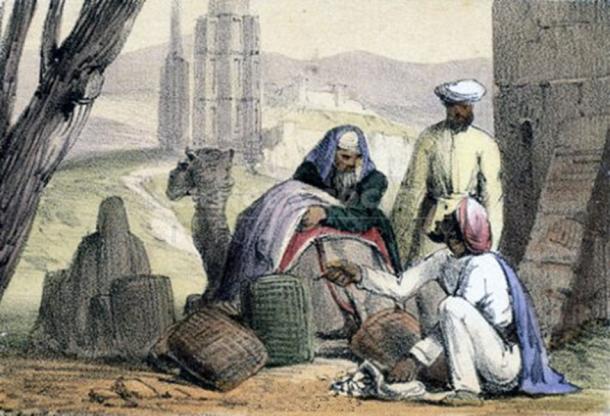
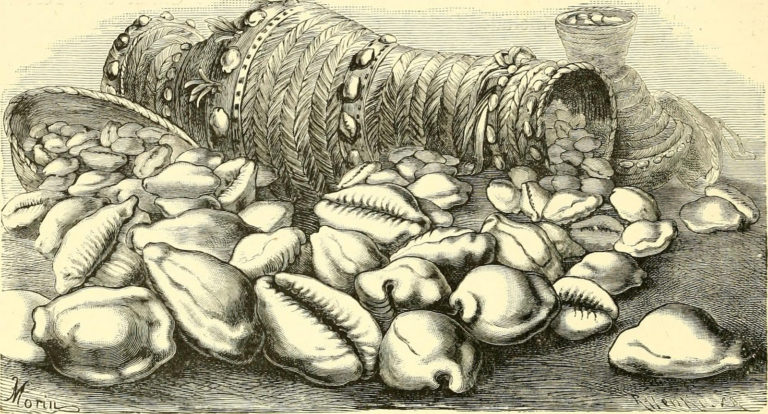
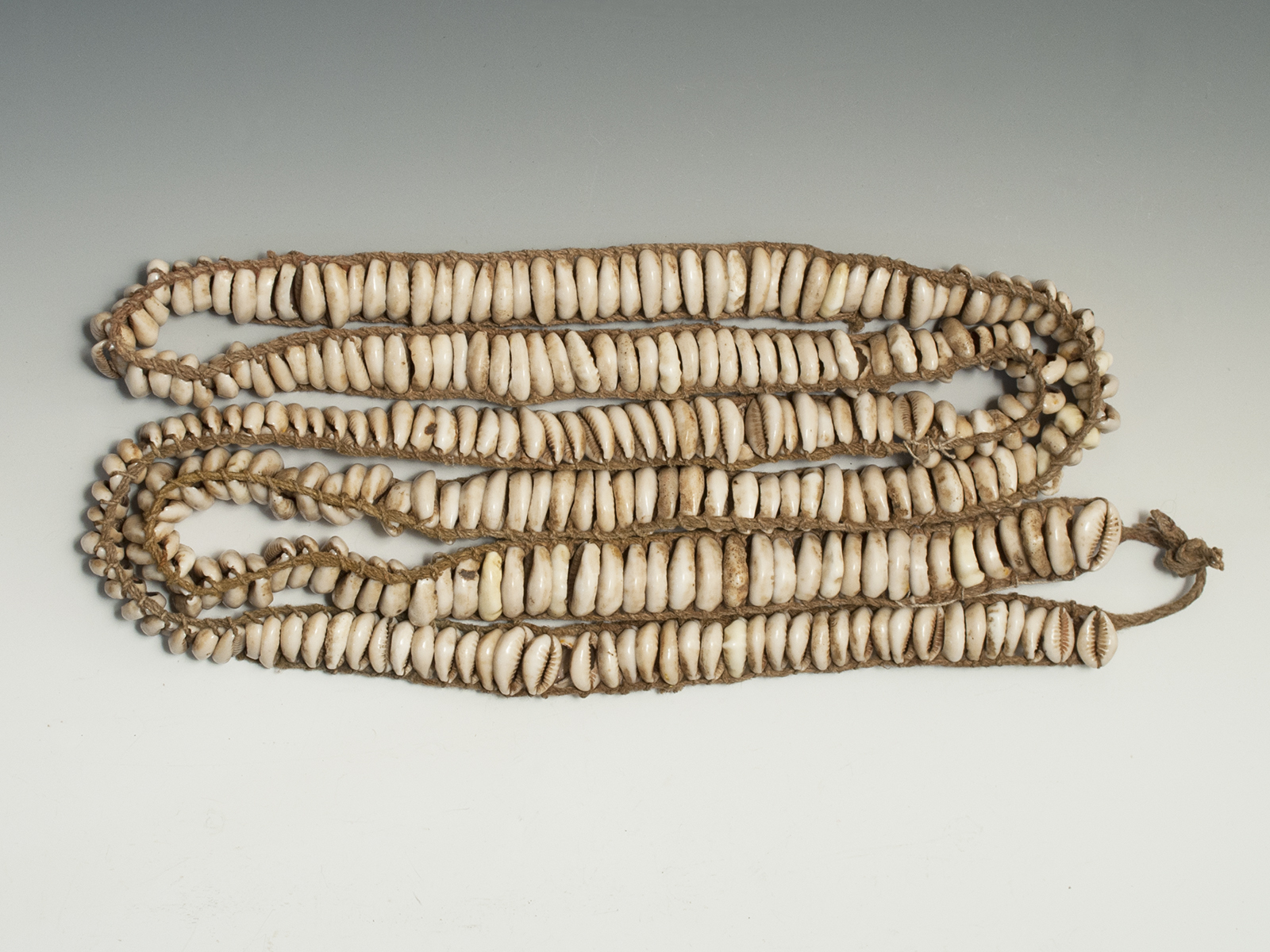
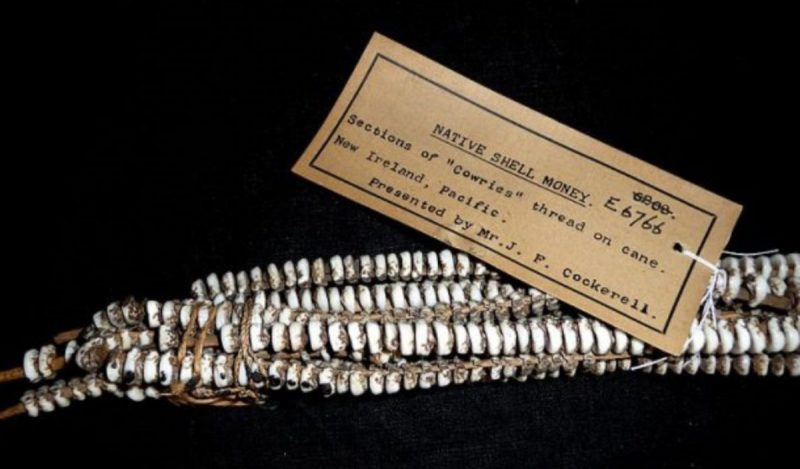

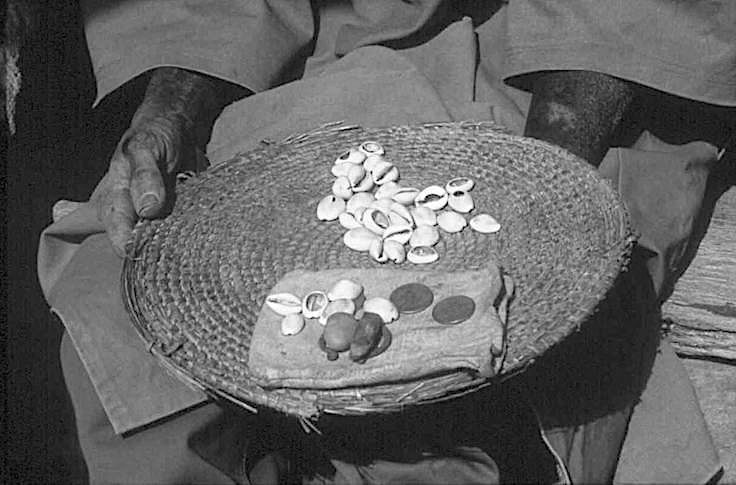

The most widely and longest-used currency in history. Cowrie shells, principally the species Monetaria moneta from the Maldives, circulated as money across a wider geographic range and for a longer continuous period than any other pre-modern currency. They appear in Chinese records by the Shang dynasty and remained in use in parts of Africa into the twentieth century. Their utility rested on durability, portability, resistance to casual counterfeiting, and a degree of natural scarcity relative to local demand. In China the shells functioned as a medium of exchange and a unit of account; the cowrie radical remains embedded in characters associated with value and wealth. In India, Southeast Asia, and across the Indian Ocean trade they served similar roles.
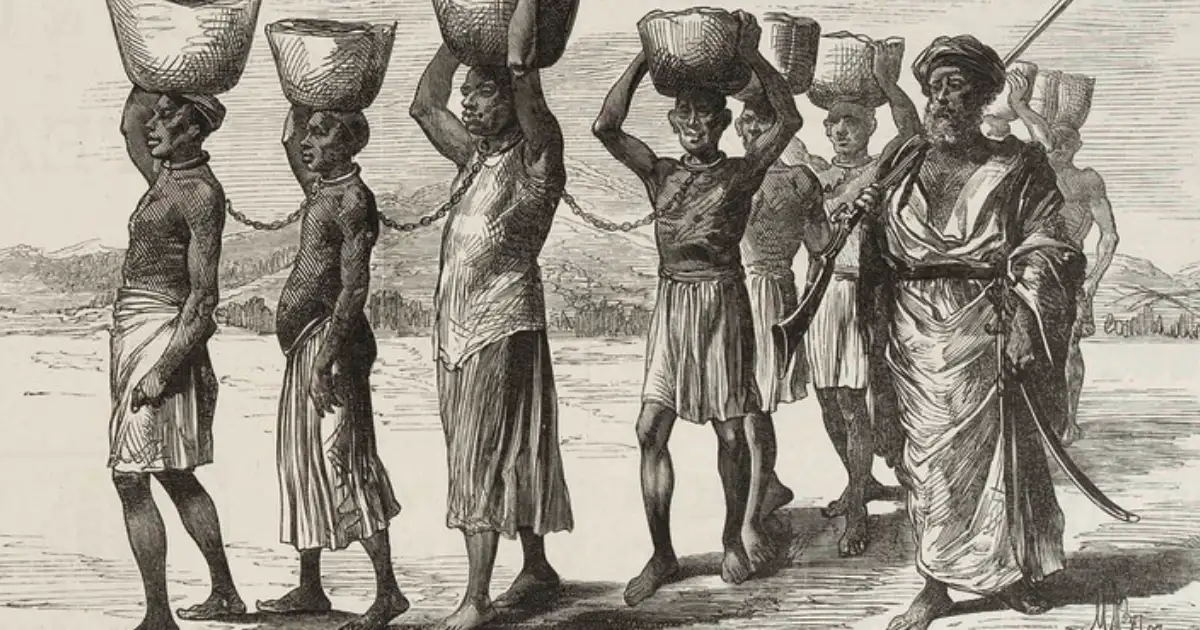
European traders later imported them in massive quantities into West Africa, where they became a major medium for both ordinary exchange and the slave trade. That influx eventually undermined the scarcity that had sustained their value. Once shells could be obtained in volume from outside the existing trade networks, their purchasing power declined and they ceased to function as reliable money. The pattern was the same as with other commodity currencies: the object worked while its supply remained difficult to expand; it failed when that constraint was removed.
Commodity Money: The Global Experimentation
Barley and grain served as units of account in Mesopotamia because they were measurable and widely needed. Salt functioned as money in regions where it was scarce relative to demand. Highly valued for preservation and flavor. Used as currency or payment in many places [e.g., Solider's of Ancient Rome: Salarium >>> "Salary"; "worth one's salt". Traded along popular routes such as the Sahara and used in blocks or cakes in Africa, China, and Europe. Leather, whale teeth, and tea bricks circulated where they were difficult to produce locally or required specialized labor. Greek and Roman economies used slaves as high-value units in large transactions. Nails, red feather coils from the Solomon Islands, wampum beads, tobacco, cacao beans, and jade each operated as money within specific trade networks because they were scarce, durable enough to store, and recognizable to counterparties.
Glass beads and cowrie shells circulated across longer routes for the same reasons. Cowrie shells ultimately failed as money once European traders could import them in volume; abundance destroyed the scarcity that had made them useful. Chinese knife money and the Ban Liang coin standardized weight and shape under state authority, but the authority that standardized them could also alter them. Rai stones on Yap Island required communal labor to quarry and transport. Their value derived from the difficulty of production and the public memory of ownership. Each of these systems worked until the cost of producing or counterfeiting the object fell, or until the issuer changed the standard.
Lydian Empire: Lydian Stater [Electrum]
First "State-Issued-and-Guaranteed" Coins
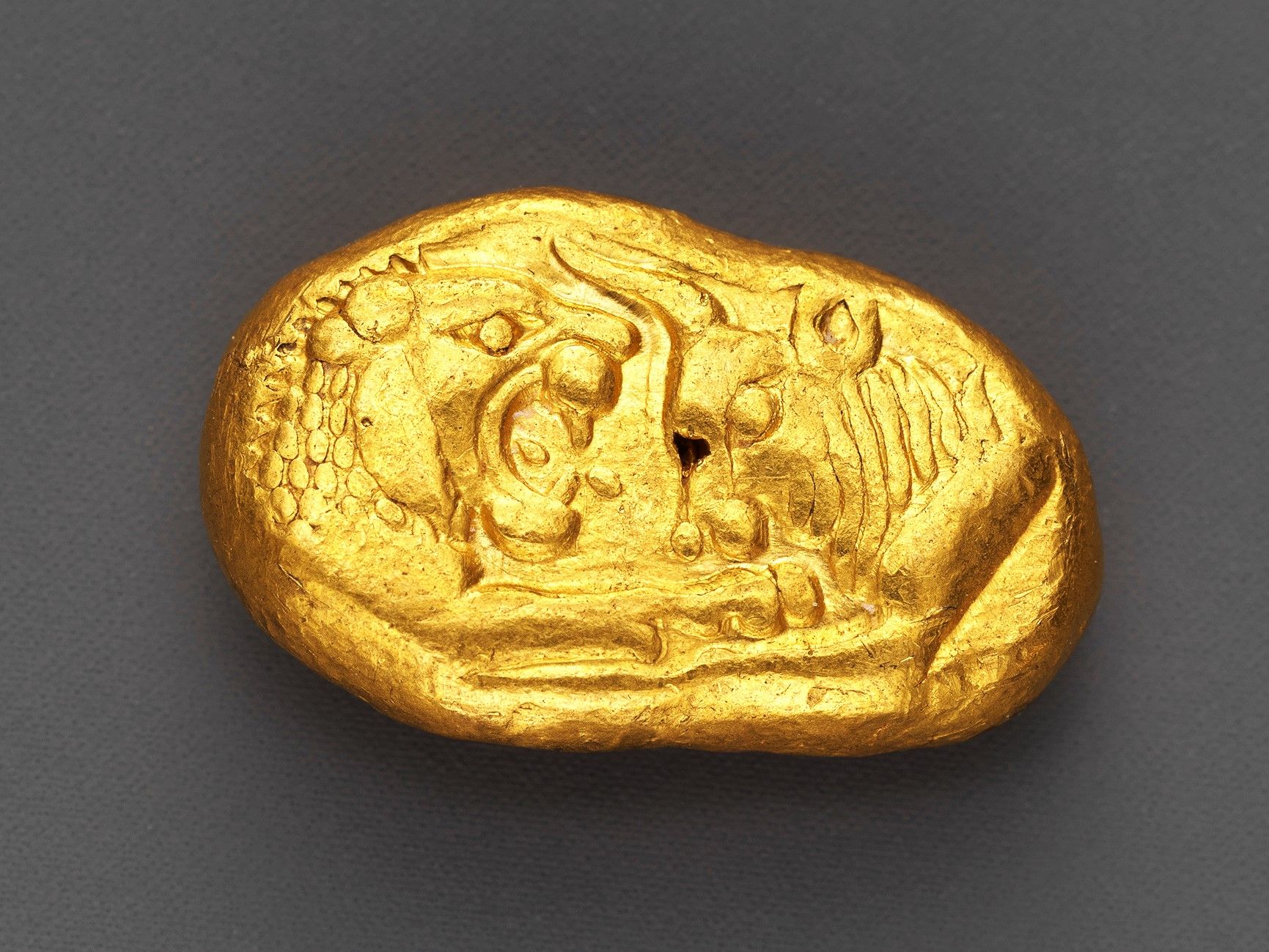
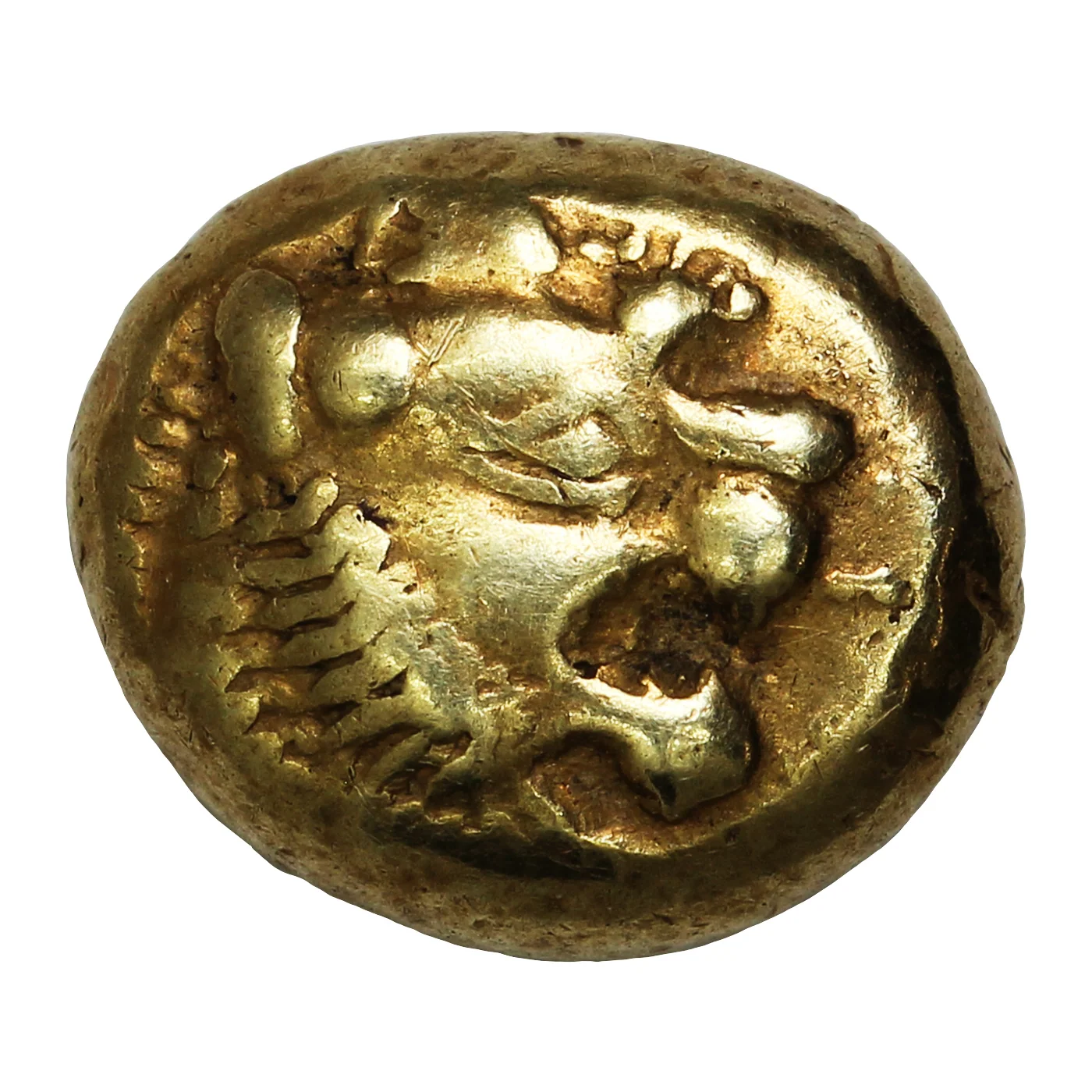
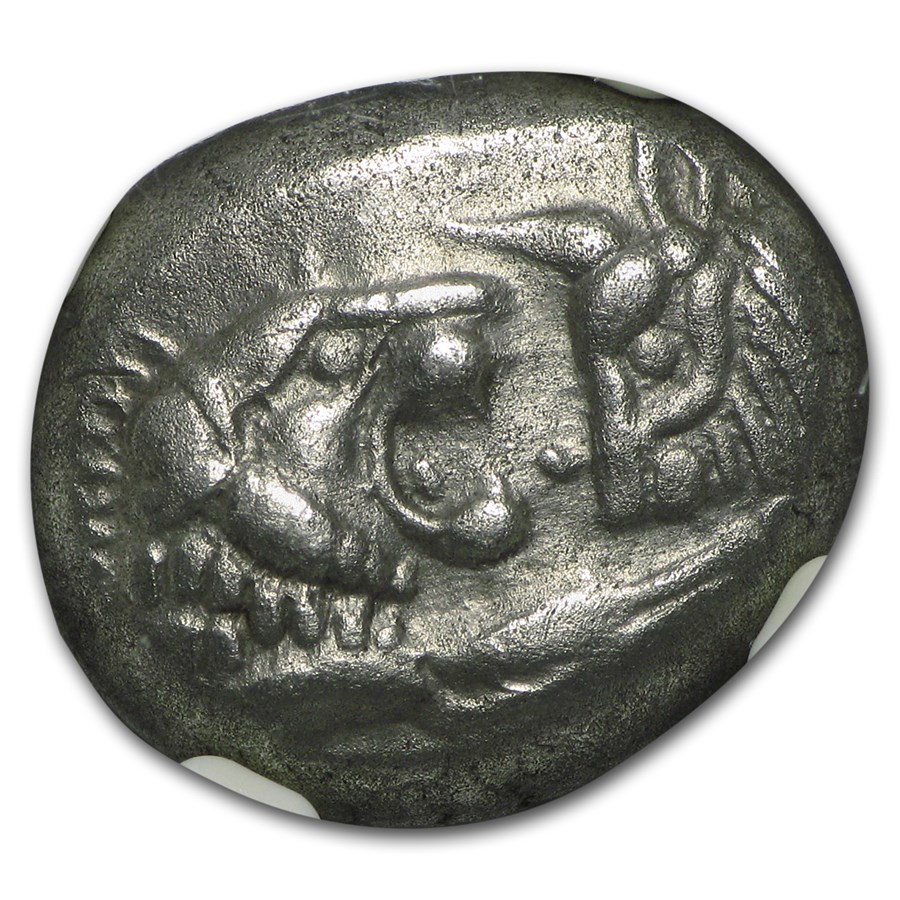
The Lydian stater, struck in western Anatolia in the late seventh century BCE, is the earliest coin for which there is clear evidence of "state-issued, standardized weight and a royal guarantee" of metal content. The coins were made of electrum, a naturally occurring gold-silver alloy, though some issues show signs of deliberate adjustment of the ratio. They carried a lion or other animal device that identified the issuing authority. Because the weight and fineness were consistent and the mark was recognizable, the stater could circulate beyond local knowledge of the individual piece.
Greek cities adopted and refined the practice within a generation, and struck coinage spread across the Mediterranean. Lydia’s position on major trade routes and its commercial culture made the innovation immediately useful. The advantage was temporary. Later Lydian issues reduced the gold content. Once users observed the change, the coins lost the premium that consistent fineness had given them. The kingdom was subsequently absorbed by Persia. The stater demonstrated that a state mark could create a tradable standard; it also demonstrated that the same authority could alter the standard when it chose.
Ancient India: The Punch Mark Coin
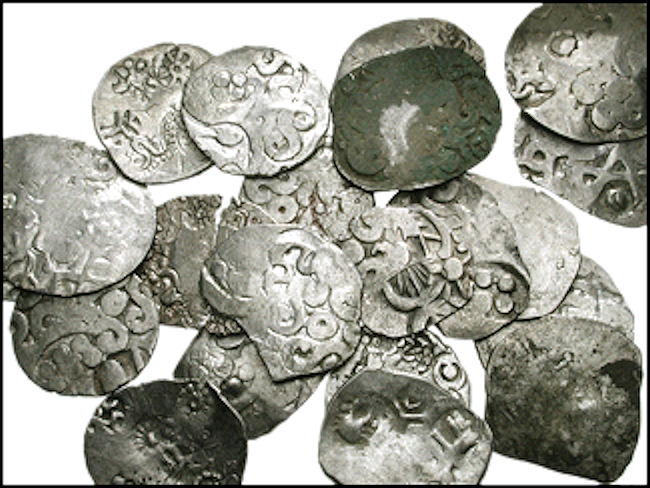
The year was 600 BCE: Punch-marked coins appeared in the Indian subcontinent by the sixth century BCE. They were pieces of silver of roughly standardized weight onto which symbols were punched. Under the Mauryan Empire they circulated across a large territory and functioned as both medium of exchange and unit of account for taxes and trade. Their irregular shape and multiple punches made them difficult to counterfeit at scale while silver remained relatively scarce. Success depended on the issuer’s restraint and on silver supply. Later dynasties reduced fineness and increased the number of punches, eroding trust. By the Gupta period the system had been largely replaced by cast and die-struck coins of more consistent weight. The punch-mark coin failed when the cost of producing lower-quality pieces fell below the cost of producing full-weight ones, and when political fragmentation removed any single authority capable of enforcing a standard.
Ancient Persia: The Gold Daric
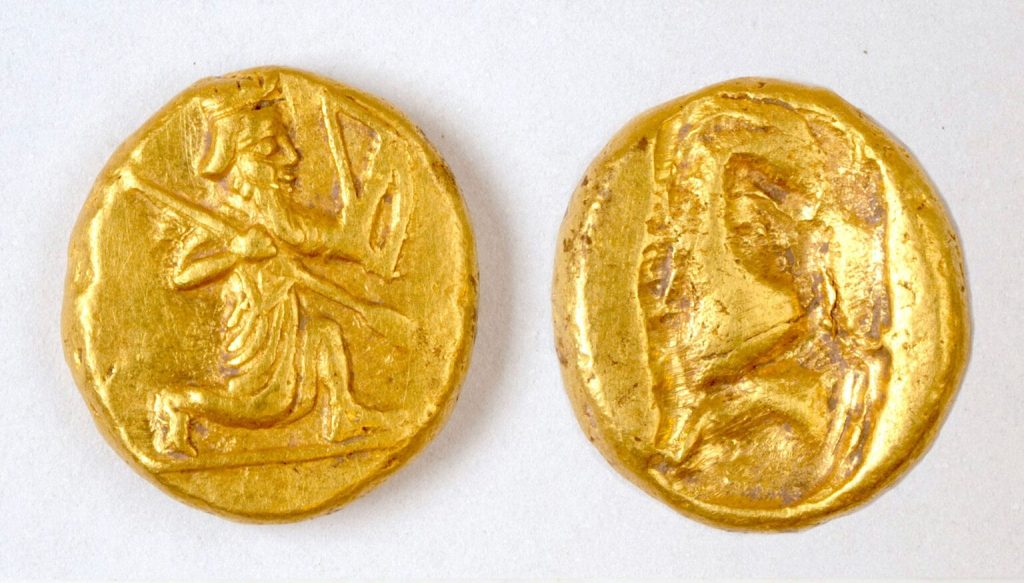
The year was 515 BCE: Darius I introduced the gold daric around 515 BCE. The coin was struck to a high and consistent purity and weight. It became the preferred medium for large payments and long-distance trade across the Achaemenid Empire and beyond. Merchants accepted it because the metal content was reliable and the issuing authority was strong enough to punish debasement. It functioned effectively as a store of value and as a unit of account for high-value contracts. The daric’s success ended with the empire. After Alexander’s conquest the coinage system was replaced. Later Persian rulers who attempted to revive gold coinage faced the same pressures that affect any state-issued money: the temptation to reduce fineness to finance military spending. Once the central authority that guaranteed the standard disappeared, the coin lost its advantage over local silver or barter.
Ancient Greece: The Athenian Teradrachm
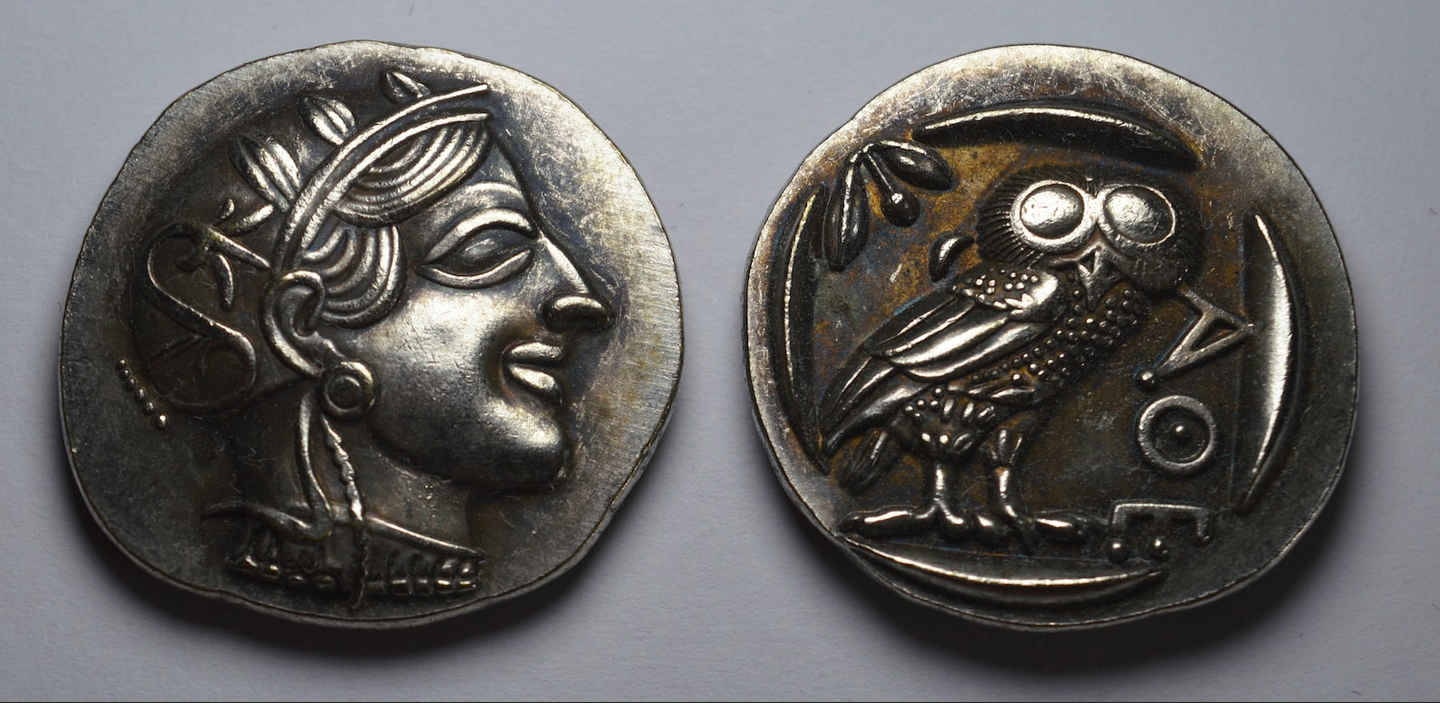
The year was 450 BCE: The Athenian “owl” tetradrachm reached peak circulation in the fifth century BCE. Struck from high-purity silver from the Laurion mines, it was accepted across the eastern Mediterranean as a trade coin. Its consistent weight and recognizable design allowed it to serve as a medium of exchange far beyond Athens and as a store of value for merchants who needed a reliable silver instrument. The coin’s reputation rested on the city’s ability to maintain fineness and to punish counterfeiters. Athens debased the tetradrachm during the Peloponnesian War to finance military expenditure. Once the silver content fell, foreign acceptance declined. Competing city-states issued their own coins, and the owl lost its position as the dominant trade currency. The failure was political and fiscal: the issuer chose short-term spending over the long-term credibility of the standard.
Roman Republic: The Silver Denarius
The year was 211 BCE: The Roman Denarius began as a high-purity silver coin. Over centuries the silver content was reduced to finance military spending and public obligations. By the third century the coin was largely base metal. Prices rose. The ability to collect taxes in real goods declined. The debasement did not cause the fall of the Western Empire by itself, but it removed a reliable unit of account and store of value at a time when administrative capacity was already under strain. The pattern—expand the money supply to meet immediate obligations, accept the long-term loss of monetary credibility—reappears in later empires.
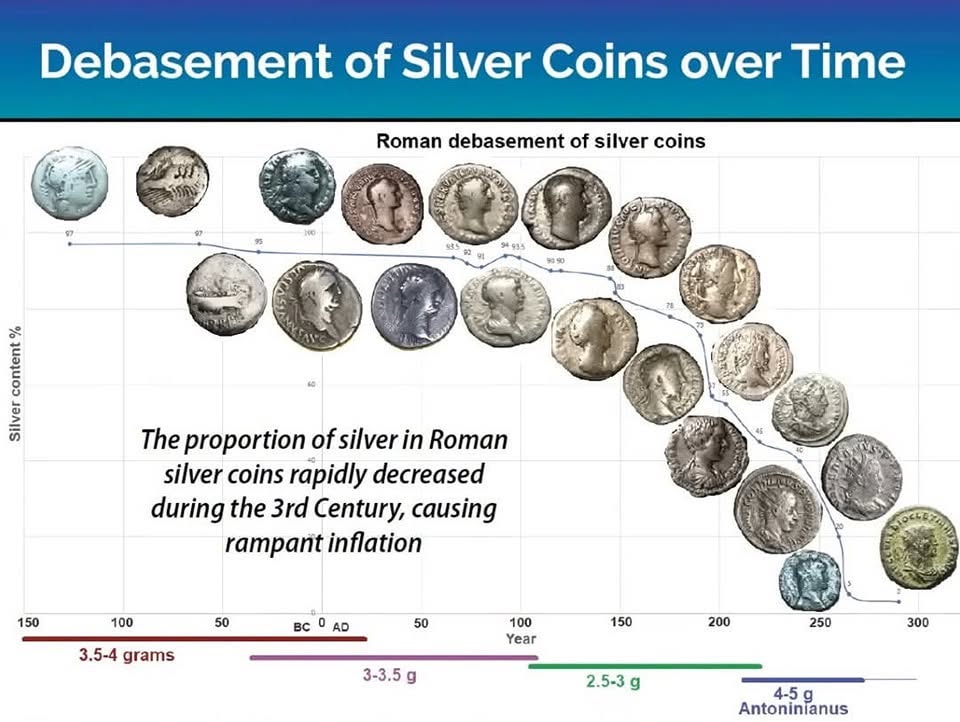
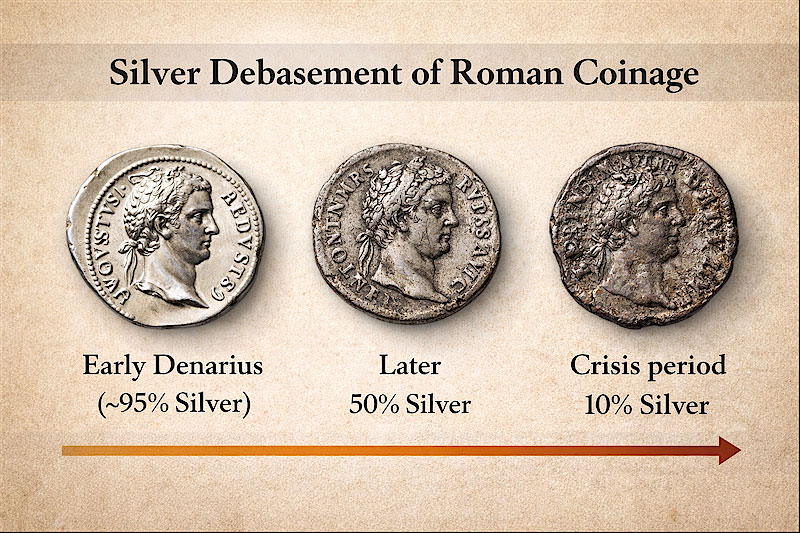
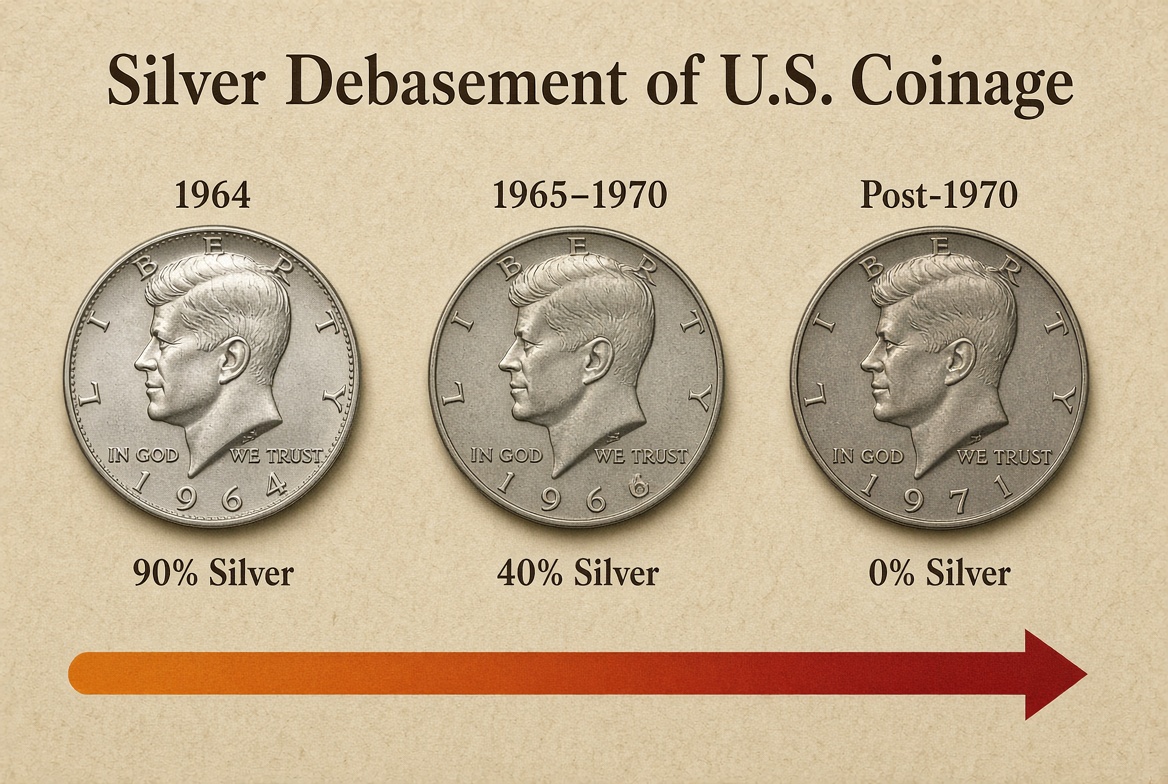
Global superpower. Failed money.
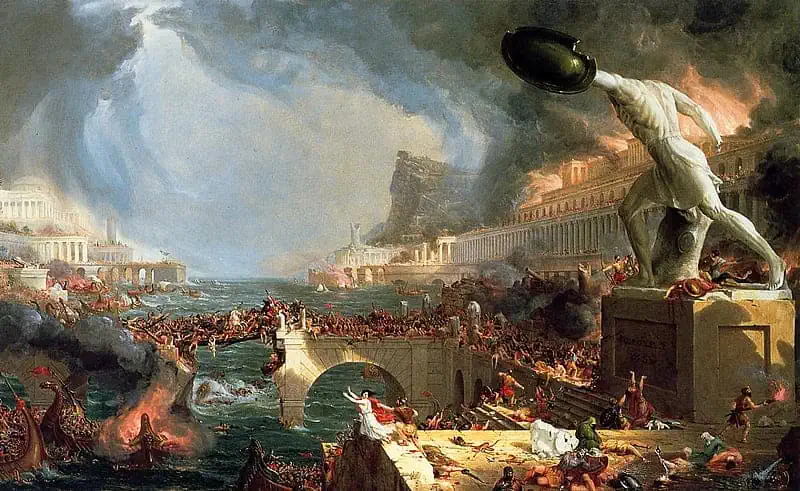
Even before Jesus of Nazareth was born, societies across the globe had now experienced dozens of iterations of money rooted in remarkable human ingenuity and innovation, some which lasted dozens, -- and many, infact, lasted for hundreds of years. But ultimately, they all failed. Even with the terminal risk of a crumbling empire, countless leaders and visionaries of Ancient Rome simply couldn't resist debasing their money, over and over again, effectively kicking the can toward its own demise.
Debasement is theft: Savers are punished
Time period, geographic location, language, relgion, or ethnicity is completely irrelevant: Broken money directly correlates with widespread social strain, reduced trust in institutions, the erosion of long-term planning, and dramatically punishes holders of the money being debased as purchasing power disintegrates. Effectively, when the money is broken, a humans earned storage of their time and energy output as value, stored in a unique and specific monetary tool, is fundamentally stolen, silently. Saving toward a healthy standard of living, let alone aiming toward wealth and freedom, with a broken monetary unit, becomes mathematically impossible.
Money is constantly evolving
For approximately 9,000 consecutive years humanity has discovered, invented, and mandated thousands of forms of money, from hundreds of societies around our planet Earth, and almost unbelievably, every single one of them has failed the test of time.
Late Roman Empire: The Gold Solidus
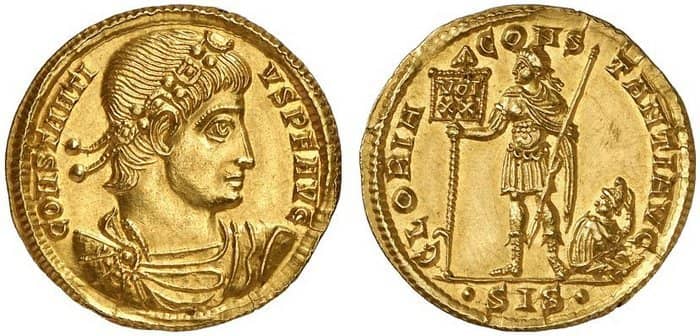
The year was 309 BCE. Constantine The Great introduced the gold solidus in the early fourth century. The gold solidus (Latin for "solid" from nummus solidus or "solid coin" referring to its pure, substantial gold content rather than a thin plate), was a highly-pure gold coin which replaced the Roman Aureus as the official new standard gold denomination.
Remarkably, for roughly seven hundred consecutive years the soldius gold coin maintained a high weight and purity and was widely considered trusted, respected, and stable. It circulated from Western Europe to the Middle East and functioned as the principal unit of account and store of value for international trade. Its longevity was exceptional. Merchants and governments accepted it because the issuing authority, for most of that period, treated debasement as a last resort.
As showcased with every other example of money in human history leading up to this point, this experiment also became a failed money project. From the eleventh century onward the solidus was progressively debased. Later emperors consecutively and consistently reduced the gold content to meet fiscal needs. By the thirteenth century the coin no longer commanded the same international confidence. The gold solidus failed when the political and military pressures on the empire made continued restraint more costly to the issuer than the loss of monetary credibility.
Italian States: The Florentine Gold Florin
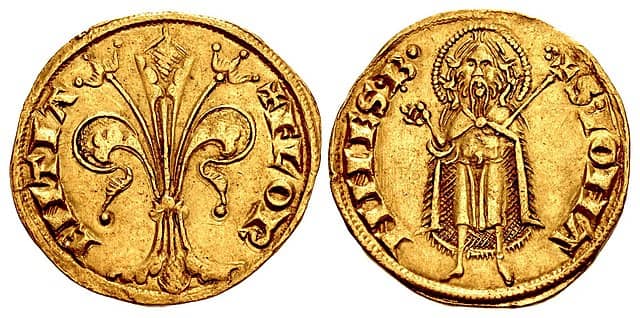
Florence began striking the gold florin in 1252. The coin was of high and consistent purity. It quickly became a standard for international trade and banking across Europe. Merchants priced contracts in florins because the coin’s gold content was reliable and the city’s commercial reputation reinforced the monetary standard. It served as a medium of exchange, a store of value, and a unit of account for large transactions. The florin’s dominance declined as other Italian cities and northern European states issued competing gold coins of similar quality. Florence itself faced fiscal pressures in later centuries and could not prevent the gradual erosion of the coin’s unique status. The florin failed not through sudden debasement but through competition and the eventual inability of a single city-state to maintain a continental monetary standard once larger political units emerged.
Italian States: The Venice Gold Ducat
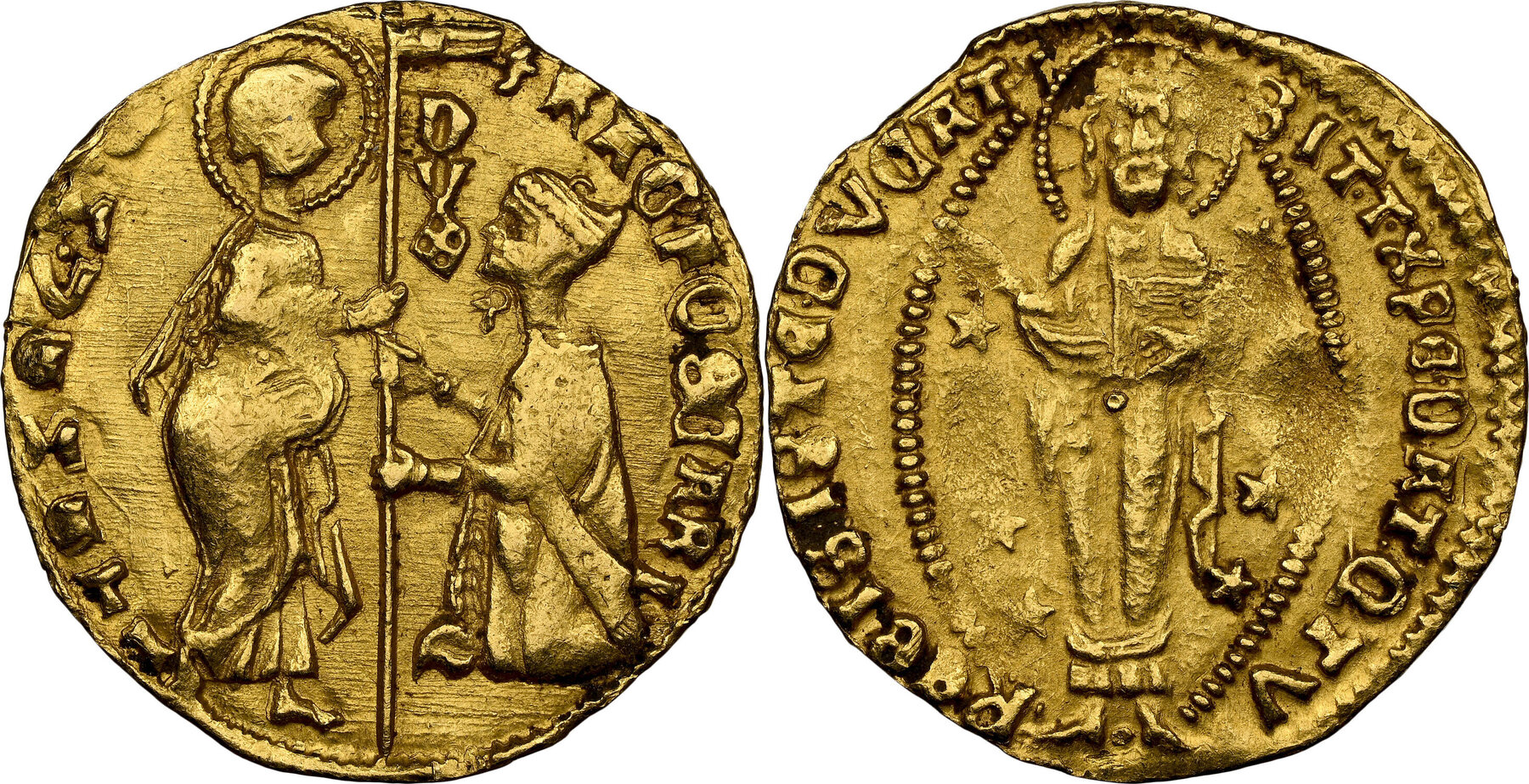
Venice introduced the gold ducat in 1284. Like the florin, it was struck to a high standard of purity and weight. It circulated widely in Mediterranean and European trade and was accepted as a reliable store of value and unit of account. Venetian commercial power and the city’s consistent minting practices sustained demand for the coin for centuries. The ducat’s position eroded as larger states adopted their own gold standards and as Venice’s relative commercial importance declined. Later Venetian issues faced the same pressures of war finance that affected other issuers. The coin remained in production for a long period, but it ceased to function as a dominant international standard once competing coins of equal or greater reliability became available and once the issuing city’s power no longer underwrote exclusive confidence in its money.
Joachimsthal: The Silver Thaler
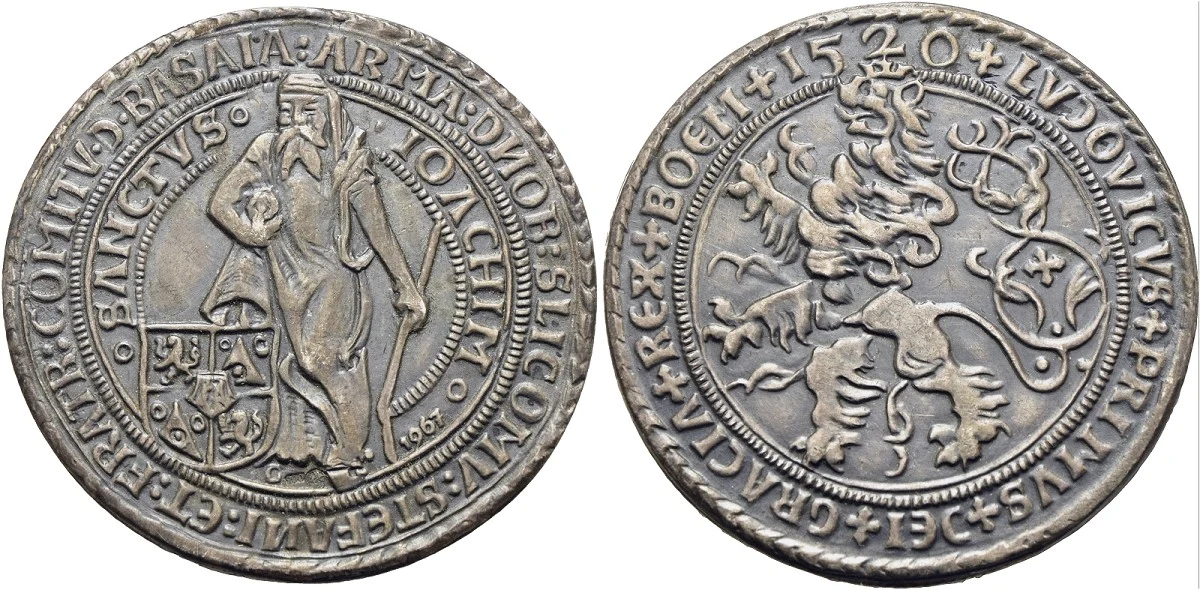
1520 was the year, 256 years before The United States of America was established, Europe had new competition for money in the form of a large, new silver coin. After significant silver deposits were found in Joachimsthal [today Jáchymov in the Czech Republic], the Counts of Schlick immediately began striking these large silver coins which became known as the Joachimsthaler, later shortened to “Thaler”. It was heavier and of higher fineness than most contemporary silver coins. Because its silver content was relatively consistent and its size made it practical for larger payments, it circulated widely across Central Europe. Merchants and governments used it as a medium of exchange and as a reference unit for contracts.
First Thaler. Then Daalder. Then Dollar.
The Thaler became the leading silver coin of central Europe for centuries. Via the Dutch, “Daalder” Lion Dollar, the name evolved and later reached English as "Dollar" – which The United States of America later adopted for its own official currency and branding with The Coinage Act of 1792. The Thaler’s success depended on the mines at Joachimsthal and on the willingness of multiple authorities to strike coins to a similar standard. Over time, competing mints reduced fineness or weight. Clipping and counterfeiting were persistent problems with any large silver coin. By the seventeenth and eighteenth centuries the original Joachimsthaler standard had been diluted across dozens of local variants. The coin failed as a uniform standard once the cost of producing lower-quality pieces fell and once no single authority could enforce the original weight and purity across the territories where it circulated.
Dutch Republic: The Silver Lion Daalder
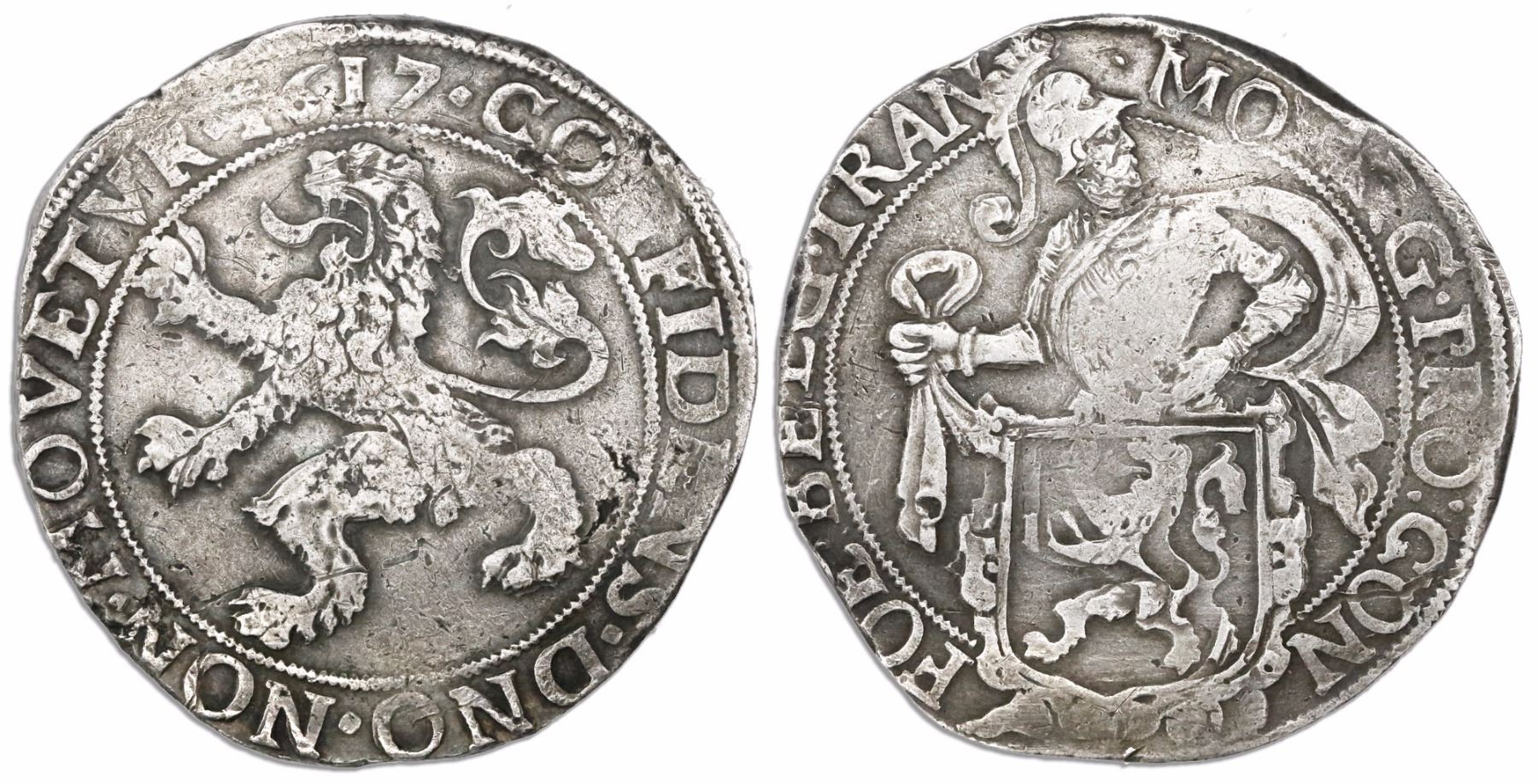
Silver Coins were all the rage. New modern money. Global Trade Currencies: The first "Lion Daalders" officially known officially as "Leewndaalders" were first minted in the province of Holland in 1575 overlapping the Eighty Years War. These "Dutch Lion Dollars" silver coins played a crucial role for global trade during the 16th and 17th centuries. Round, decorative, state-branded, and standardized coins with heavy silver content helped spawn a global currency competition and game theory. Every nation wanted, and now needed, Silver. Both the Dutch Lion Dollars and Spanish Silver Dollars "Pieces of Eight" silver dollar coins are recognized as the world's first state issued "global trade currencies" because their "weight and fineness" of silver content were widely recognized and considered desirable and "official" branded coins, first locally and regionally, then popular new trade routes sprouted new exposure and subsequent demand.
America's First "Dollars" were Dutch & Spanish
The circulation of “Lion Daalders” saw extensive use in Colonial America. The Colony of “New Amsterdam”, which is now formally known as “New York City” was colonized by the Dutch in the early 17th century. The first paper money issued by the “Colony of York” was payable in “Lion Dollars” — silver coins. Due to their debased metallic composition, the uneven, thin, and fragile coins tended to wear and the rampant lion was locally associated with the image of a dog, leading to the nickname, “dog dollars”. Nevertheless, the Lion Daalder holds an important place in Colonial history as "America’s first dollar" and the root of the word from where the current currency [the U.S. Dollar], found its name.
Spanish Silver Dollar, aka Pieces of Eight
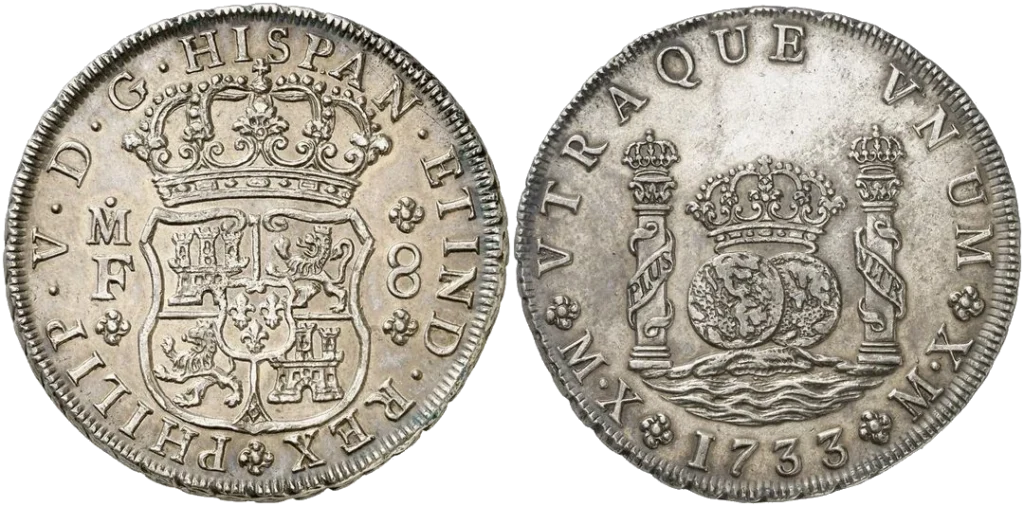
The infamous round and beautiful Spanish Milled 8 Reales silver coin known as "Real de a Ocho" and later nicknamed "Pieces of Eight" was first standardized during the Castilian monetary reforms in 1497. It was minted first in small batches and later exploded in production volume with high-purity silver content throughout the Spanish Colonial mints and across the America's, most notably from Mexico City 1535, Potosi from the 1570's, Lima, and many more. Massive silver production supplied the coinage on an unprecedented scale and dramatically increased its geographic distribution through popular trade routes.
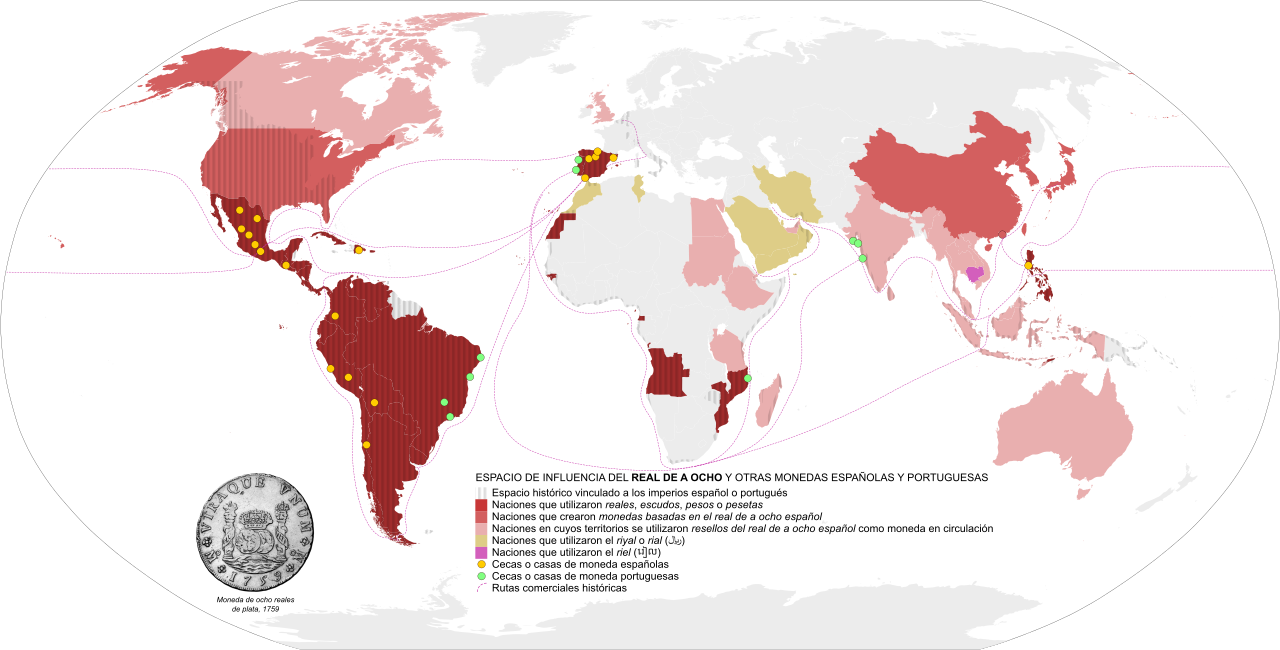
The newly redesigned and enhanced silver milled 8 Reales coins were of considerably finer silver content at ".917 fine" and bore a milled edge preventing it from shaving or clipping. Innovation flowed, results arrived quick: In short order The Spanish Dollar overthew the Dutch Lion Dollar and other smaller Middle East, Asian, and popular European coins as the much preferred "medium of exchange" regionally, throughout the colonies, then globally. The Spanish Silver Dollar was the first truly globally money; Store of Value, Medium of Exchange, and Unit of Account. Unprecendented reach, trust, demand, and power. By the late 16th century it had achieved wide intercontinental acceptance, functioning as the de facto international standard for hundreds of years until The Coinage Act of 1857 from The United States of America helped to derail it.
A major drive of the Spanish colonization of the Americas during the late 15th and 16th centuries was the discovery, production, and trading of precious metals at a time when there was a severe shortage of them. Both the Spanish Silver Dollar and Dutch Lion Dollar saw extensive use across Europe, throughout parts of Africa, The Middle East, and the America's. The same property that made them useful — portability and recognizability — made them targets for rampant clipping, sweating, and counterfeiting from cheats. Merchants weighed coins and discounted those that fell below standard. The Dutch and English response was to improve minting technology and to punish clipping, but the underlying incentive remained: any physical coin can be reduced at the margin.
Full-weight coins [silver coins with .920 fine silver] were hoarded or exported; light coins [.750 fine silver] stayed in circulation. Methods, tools, warnings, threats, and even books were created to eliminate the great difficulty in identifying and measuring silver coins from 16th to 19th century. That process and innovation evolved over time and established a new mental framework and reality on both value and trade, worldwide. Across the globe, Chinese government officials would demand taxes to be paid in silver to the point that silver eventually backed all of China's economy and caused a shortage.
Spanish Silver Dollar: First Truly Global Money
13 American Colonies: "To Counterfeit is Death"
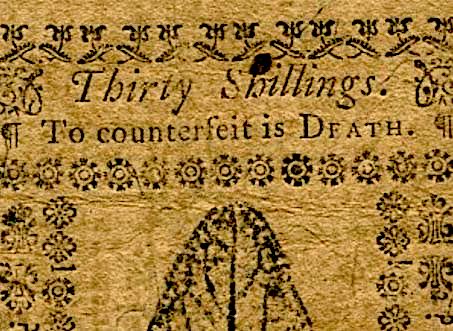
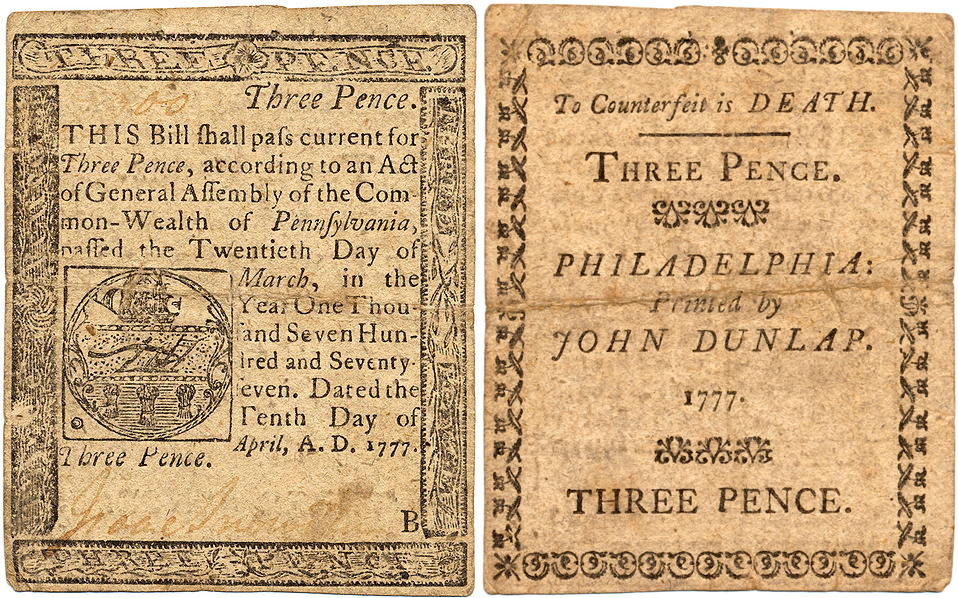
Before the Revolution the colonies used a mixture of foreign coins, commodity monies, and locally issued paper. Spanish pieces of eight and Dutch lion dollars were the most trusted circulating silver. Colonial assemblies also issued paper notes, some of which carried the warning “To Counterfeit is Death.” Philadelphia three-pence notes from the period are explicit examples. The threat was not rhetorical. Counterfeiting was treated as a serious offense because the colonies understood that confidence in the circulating medium was fragile and that a new political order would depend on it.
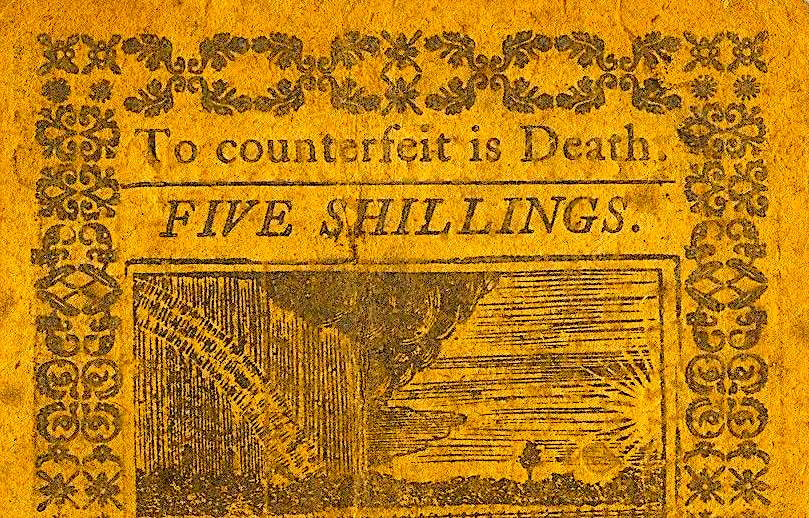
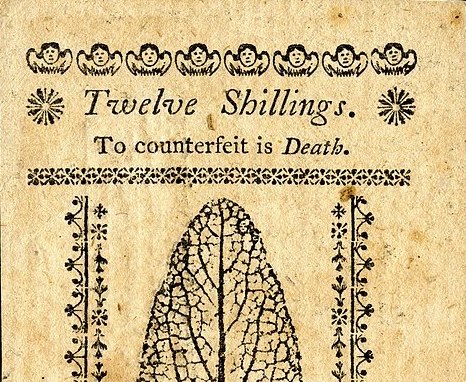
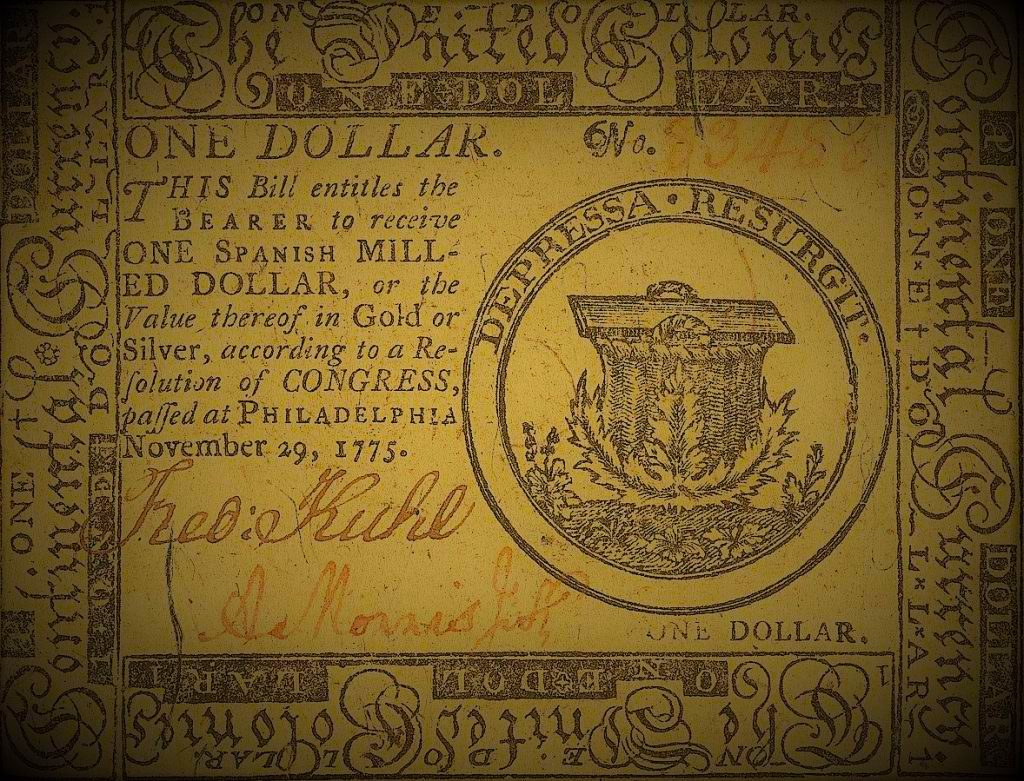
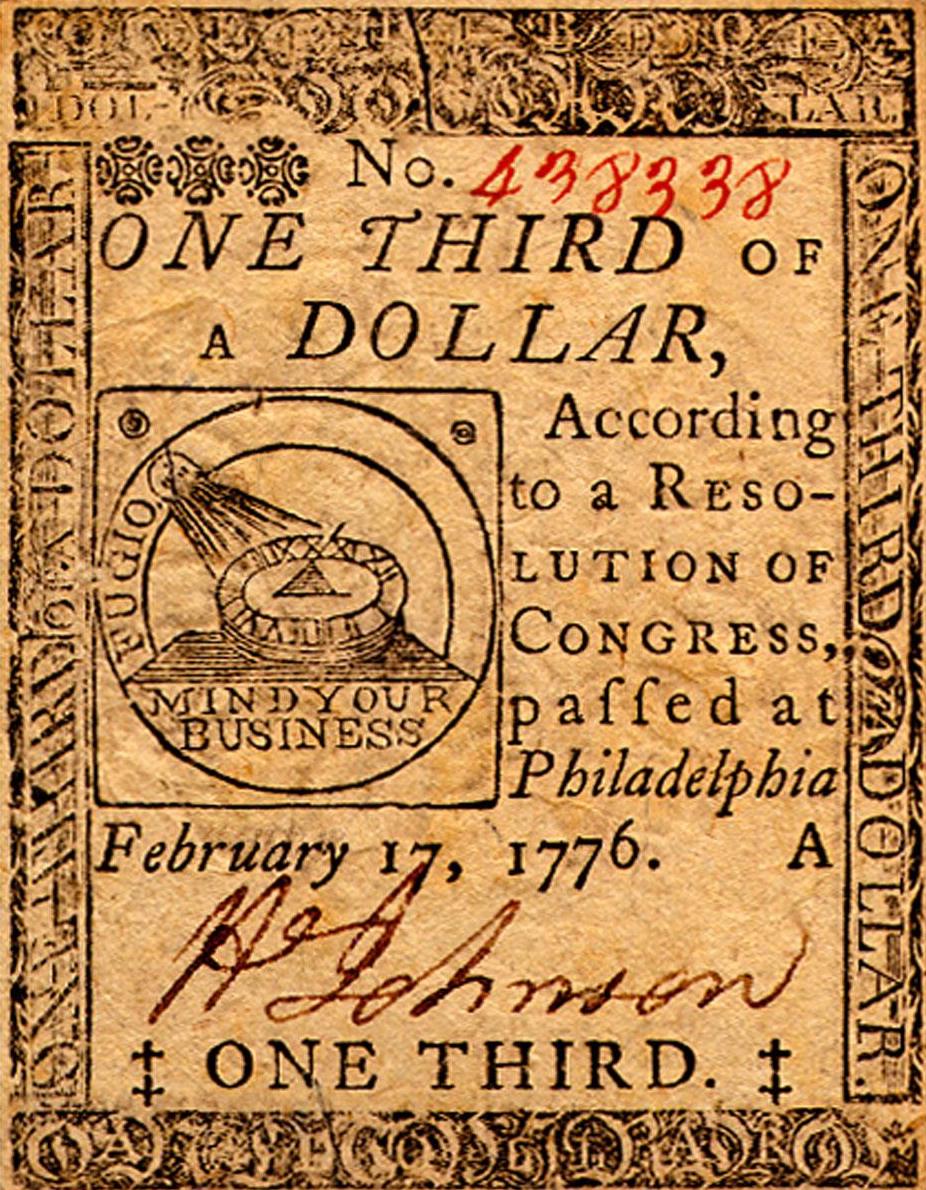
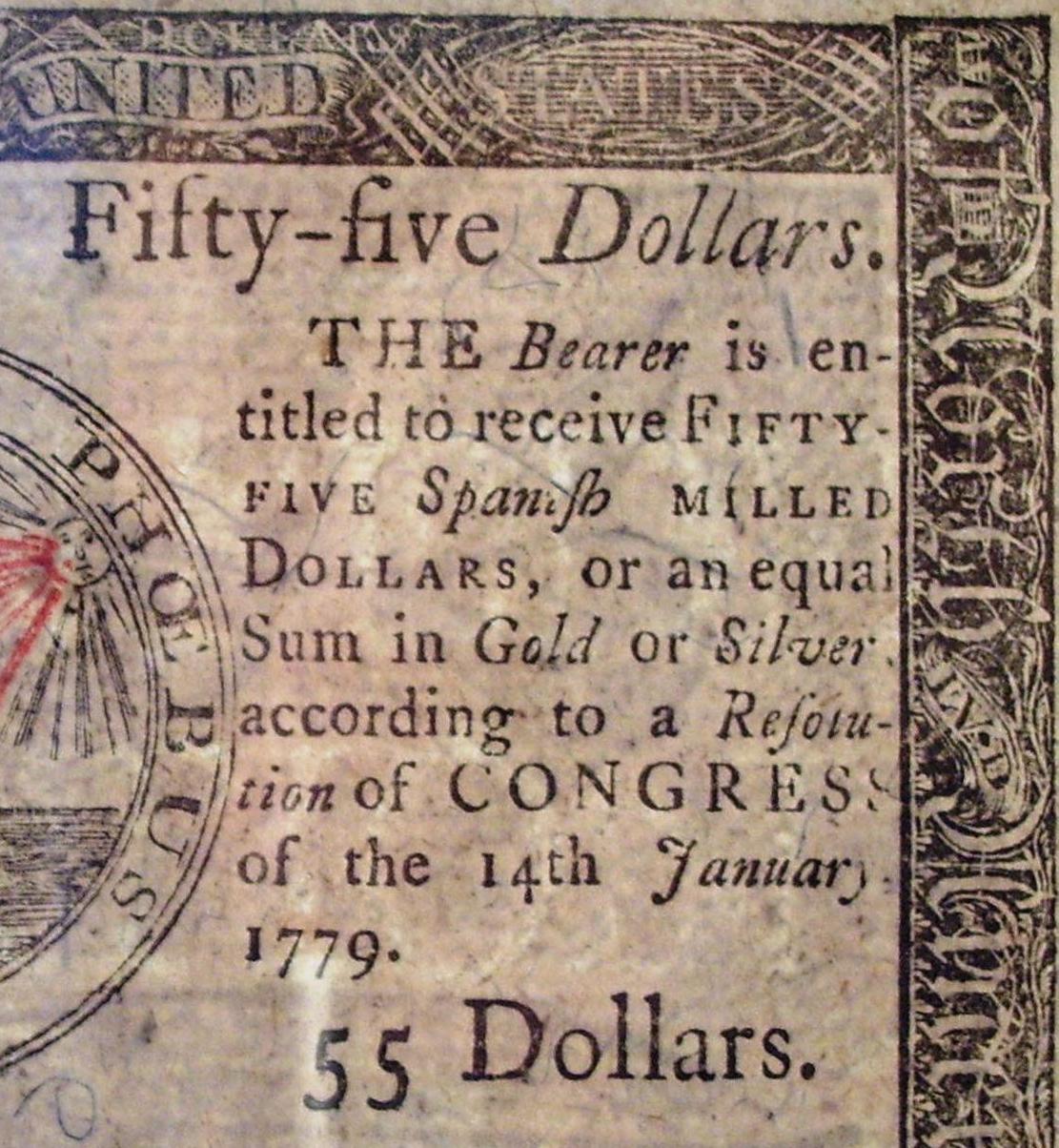
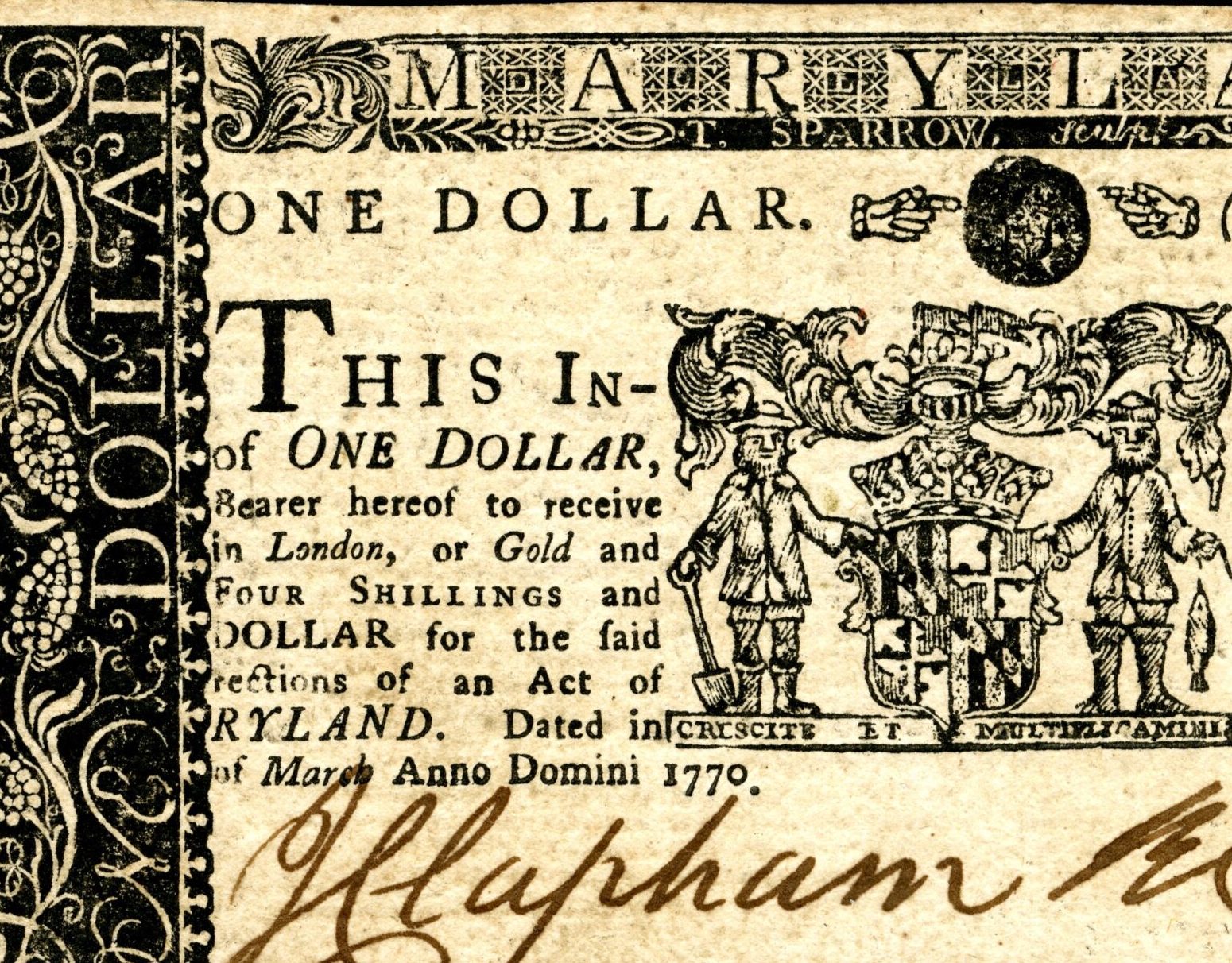
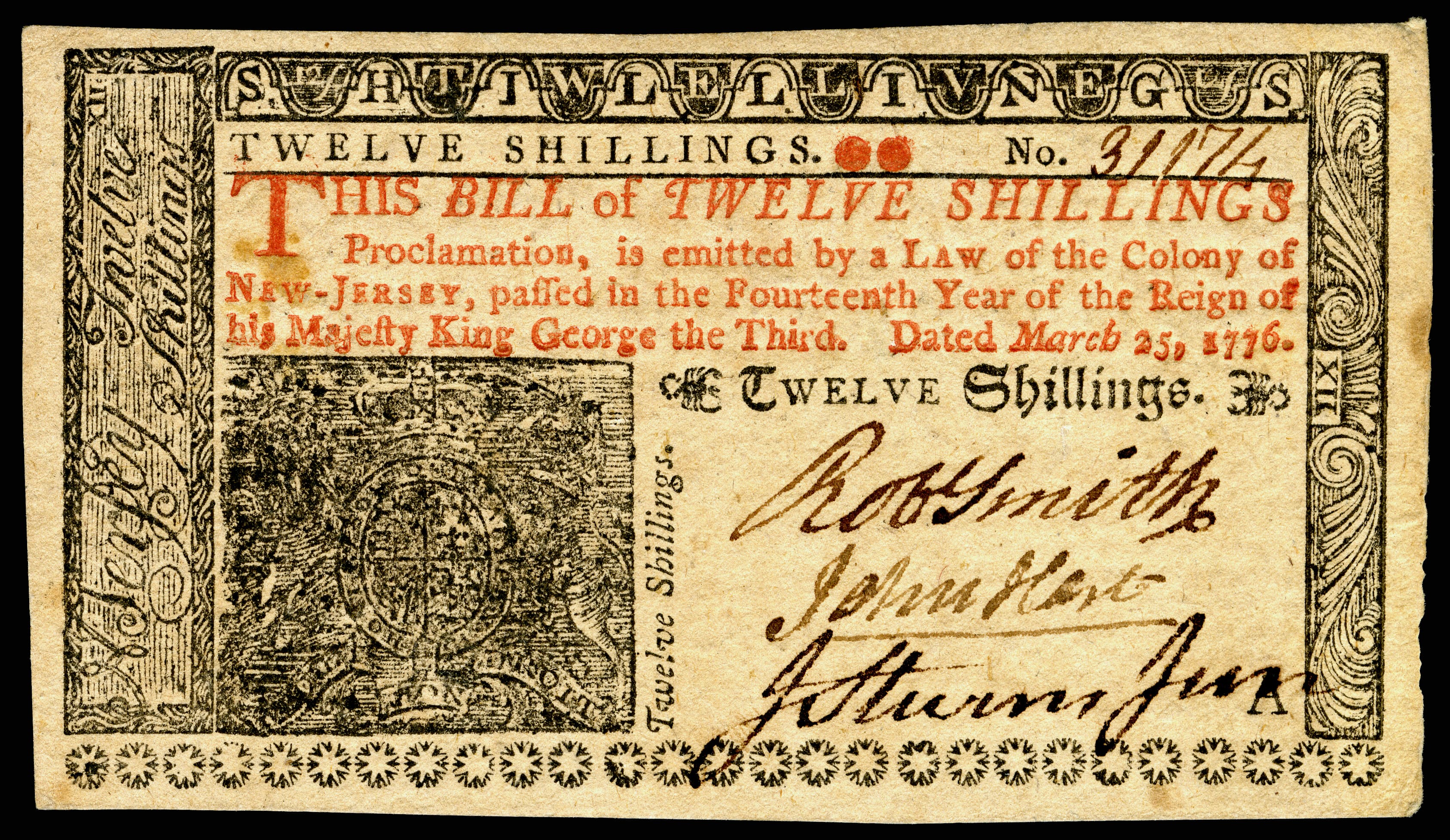
During the war the Continental Congress issued paper currency—commonly called "Continentals" or “Greenbacks” to pay soldiers and suppliers. The notes were not redeemable in specie [precious metals, coinage] on demand. As the volume increased, their purchasing power fell. By the later years of the war they had depreciated severely. The phrase “not worth a Continental” entered the language. The paper financed expenditures the Congress could not otherwise meet. Whether that financing was decisive to the military outcome is debated; what is clear is that the Congress used "unbacked paper promises" because it lacked the power to tax effectively and because foreign loans and specie were insufficient.
The social effects were immediate: prices rose, contracts denominated in paper became unreliable, and public confidence in the issuing authority was damaged even as the war continued. After independence in 1776 the new country still had no uniform national coinage. Spanish silver dollars and other foreign coins remained the practical medium of exchange. Merchants and officials weighed and tested them. When the Coinage Act of 1792 was drafted, the committee examined circulating Spanish dollars, measured their average weight and fineness, and used that observed standard as the basis for the new American dollar.
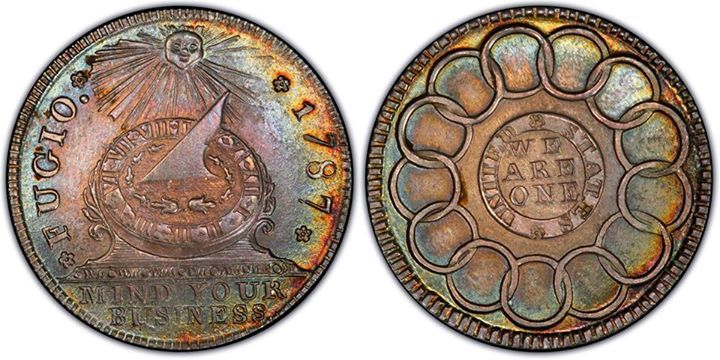
First U.S. Coin: Mind Your Business, Fugio Cent
Coinage Act of 1792: The United States Dollar
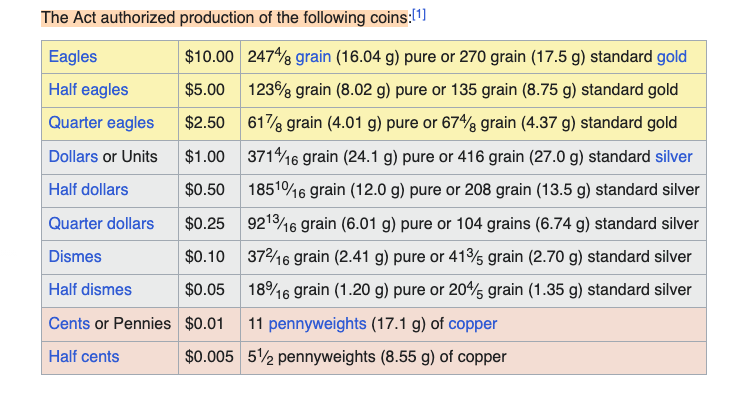
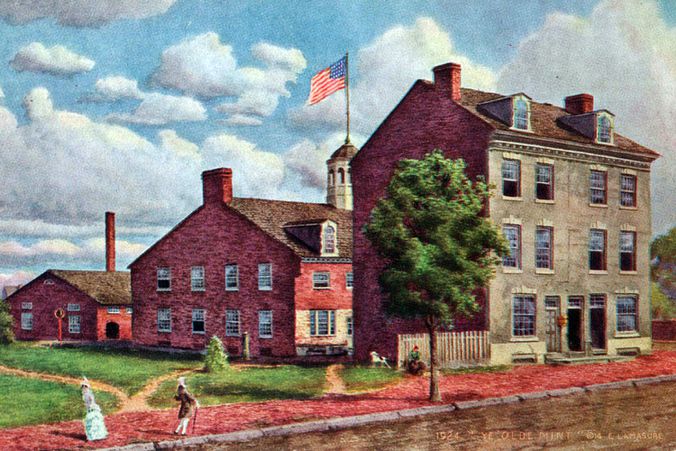
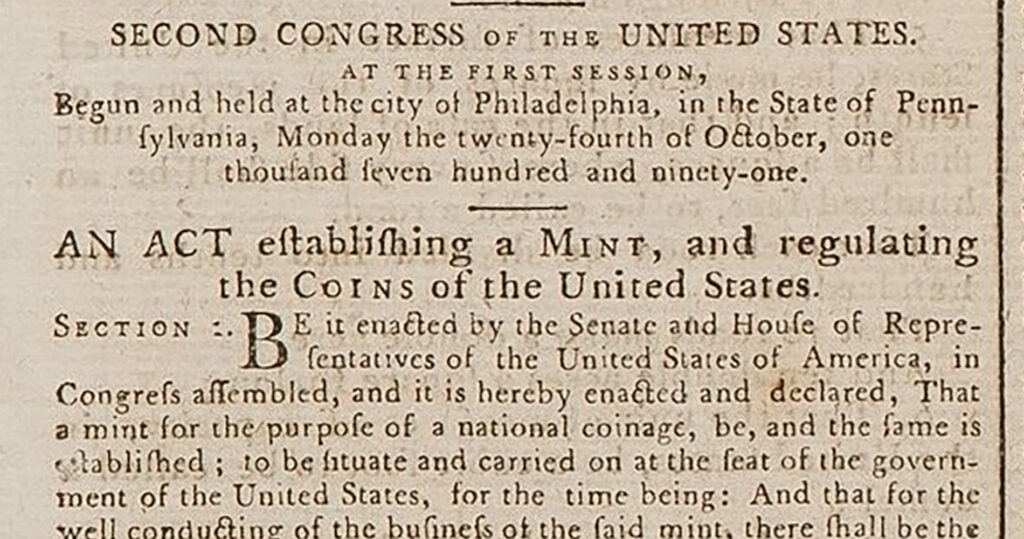
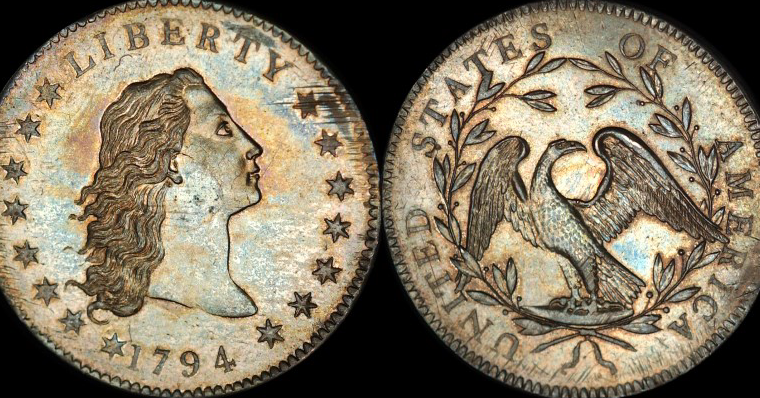
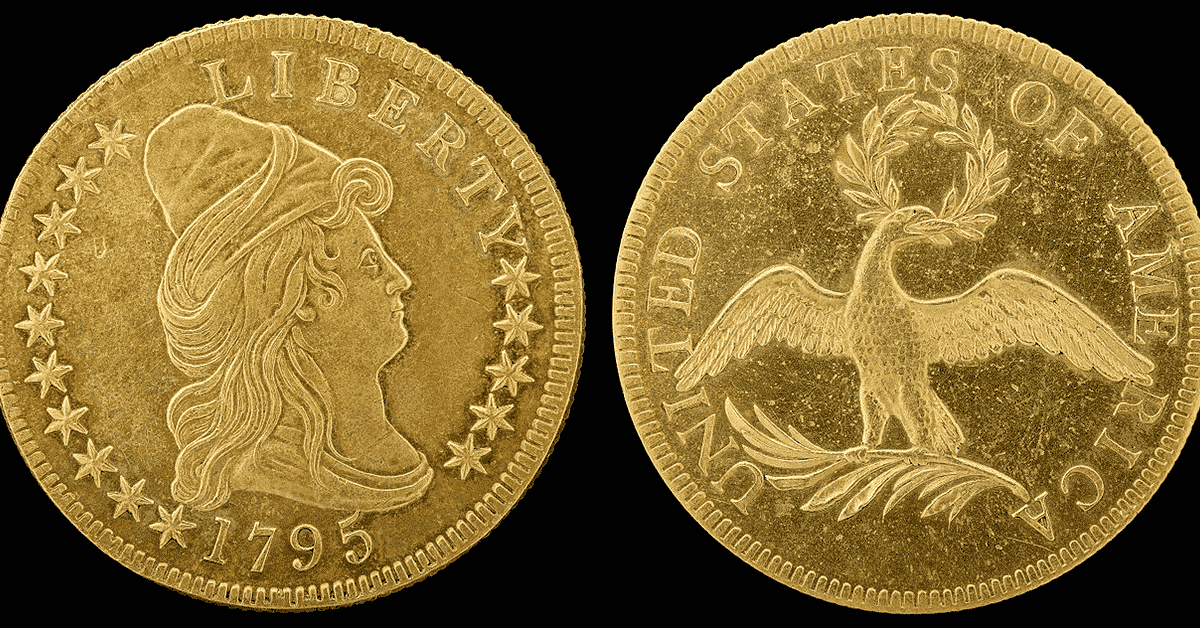
The Coinage Act of 1792, passed on April 2, 1792 and signed by President George Washington, established "The United States Mint" in Philadelphia, the nations capital at the time, and gave Congress regulatory authority over coins. It also clearly defined "The United States Dollar" as a specific weight of silver (371.25 grains of pure silver) and established the Gold Eagle coin at a fixed ratio. The Coinage Act of 1792 defined the proportional value of gold and silver as 15 units of pure silver to 1 unit of pure gold. Standard gold was defined as 11 parts pure gold to one part alloy composed of silver and copper. Standard silver was defined as 1485 parts pure silver to 179 parts copper alloy. The definition was statutory. It was not a promise to pay; it was a legal specification of metal content. The transition was deliberate. The authors of the Act had lived through the depreciation of Continental paper and the practical dominance of foreign silver. They chose to anchor the new unit in measured grains of silver and gold rather than in another paper obligation. The official "1792 United States Dollar" was hard money, by law.
The Coinage Act of 1792 specified the "United States Dollar" as the "Money of Account" of The United States, and directed that "all accounts" of the federal government be kept in U.S. Dollars. Furthermore, under Sec.14, any person could physically bring gold or silver bullion and have it coined for free, or later for a small fee, they could exchange it immediately for an equivalent value of coinage, newly minted United Staets Dollars, silver or gold coins. Interesting to note: Section 19 of the Act established a "Penalty of Death" for debasing the gold or silver coins authorized by the Act, or embezzlement of the metals for those coins, by officers or employees of the mint.
1794 Flowing Hair Dollar: $1 U.S. Dollar
1795 The Gold Eagle: $10 U.S. Dollars
1792 Original: U.S. One Cent. Copper Coin.
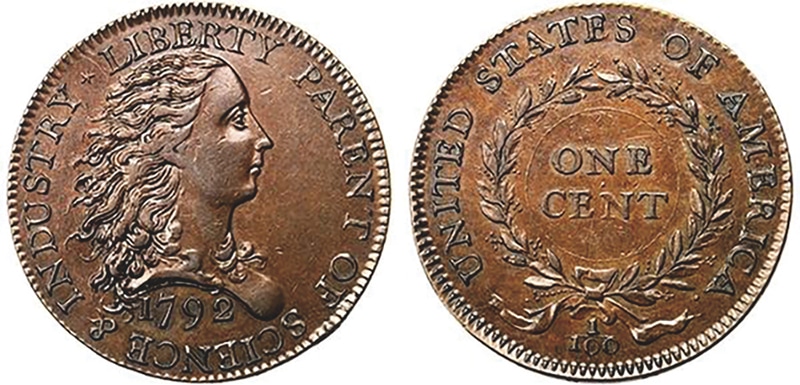
The Coinage Act of 1792 did more than define the dollar in grains of silver. It established a decimal coinage system in which the dollar was divided into one hundred cents, and it authorized the one-cent piece as the smallest unit. The cent was struck in copper and valued at one-hundredth of a dollar. Decimal division was not universal at the time; many European systems used non-decimal subdivisions that complicated calculation and exchange. By adopting a base-10 structure and a low-denomination copper coin, the Act made ordinary transactions easier to compute and reduced reliance on foreign small change. The one-cent piece was modest in metal value, yet it completed the statutory framework: a national unit defined by weight of precious metal, subdivided decimally, and supported by a domestically minted copper coin for everyday use. That combination of a fixed metallic standard and a decimal accounting unit was the operational innovation of the 1792 law.
1913 Federal Reserve Act: America's Central Bank
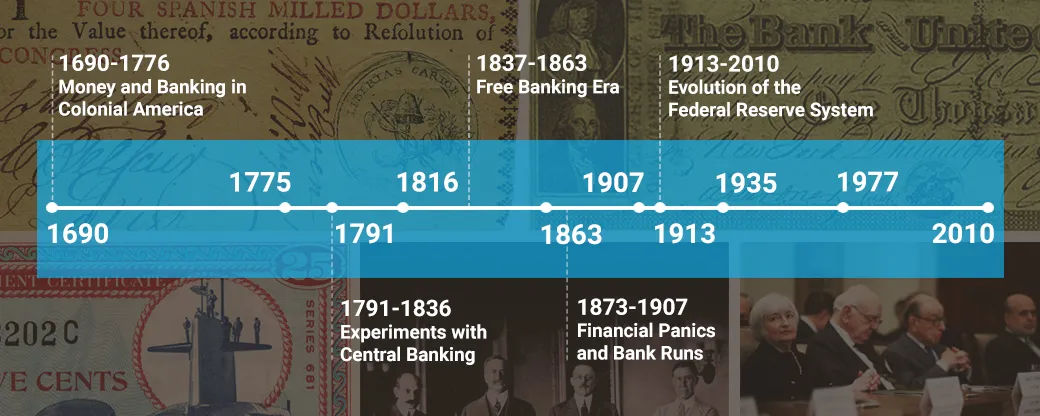

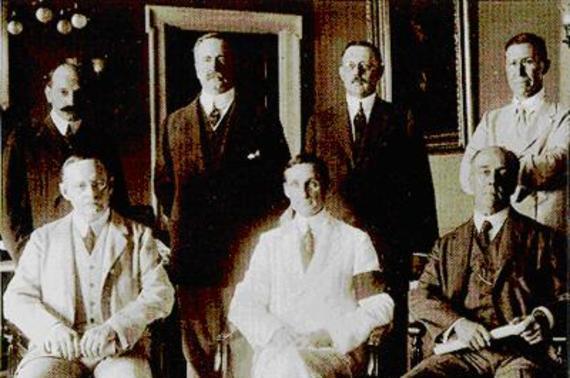
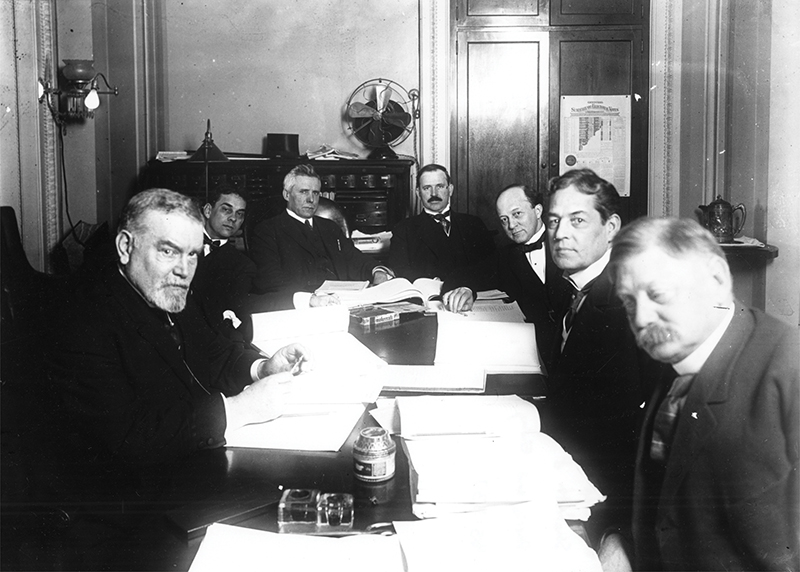
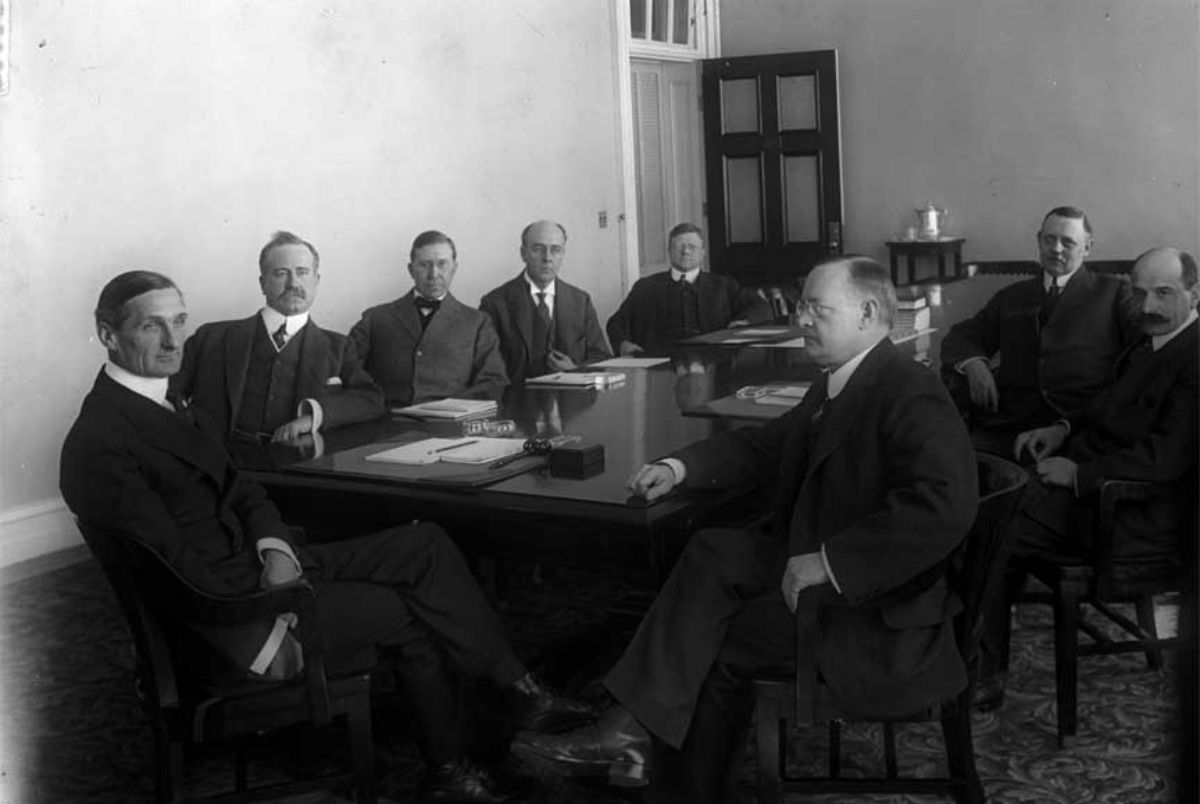
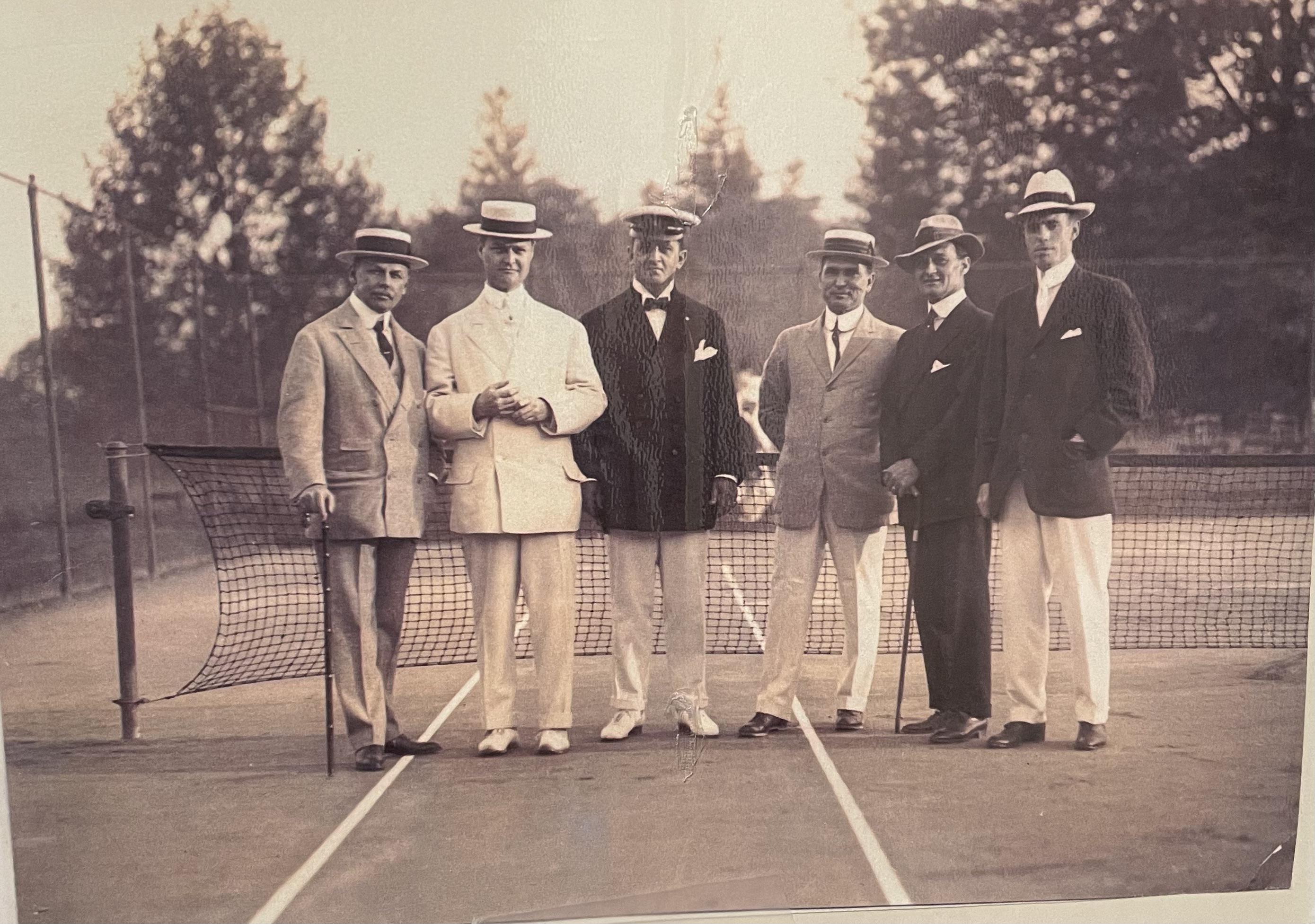
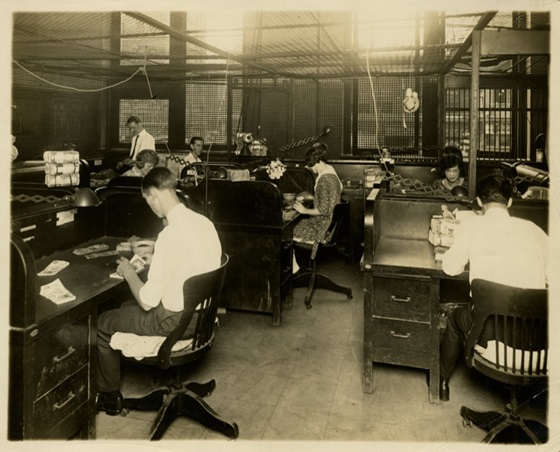
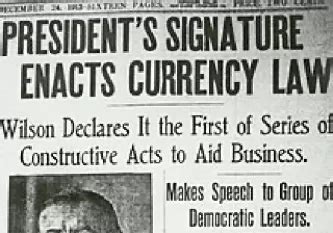
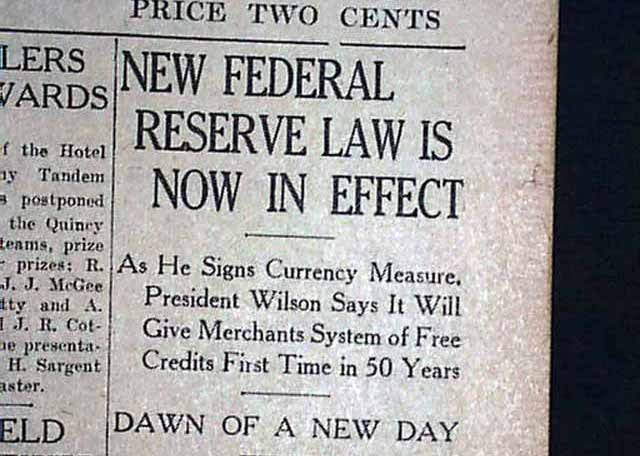
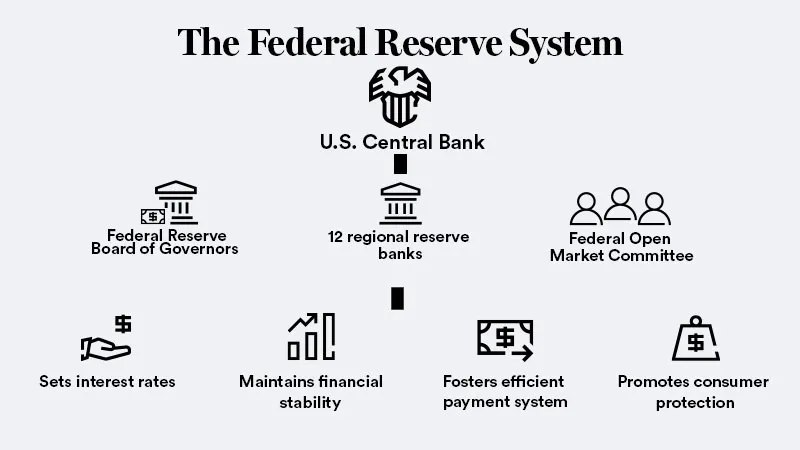
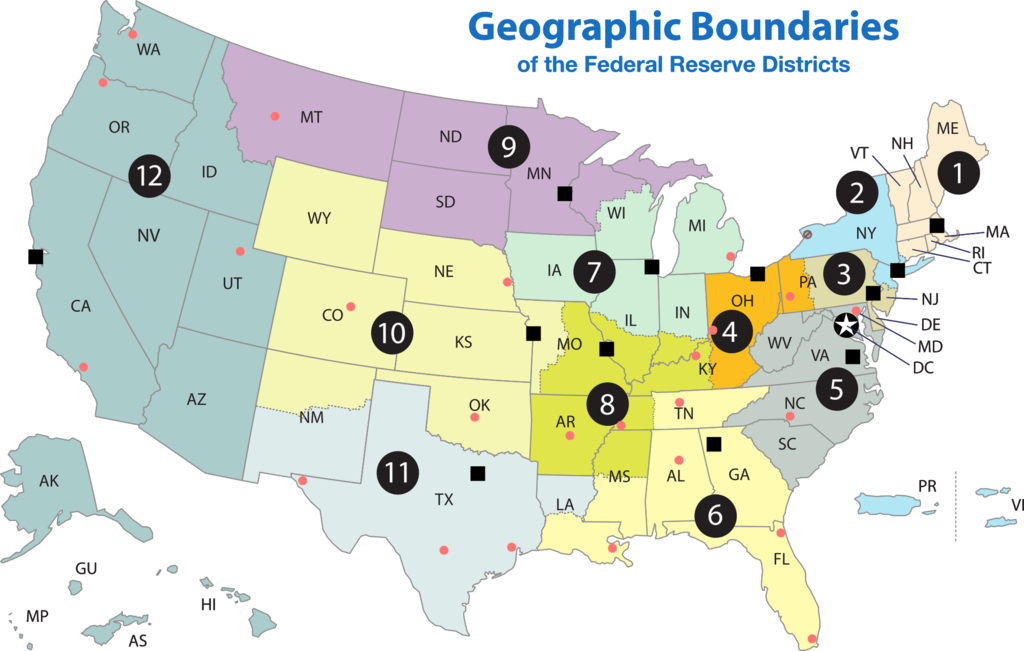
The Federal Reserve Act was signed on December 23, 1913. It created a central banking system with twelve regional Reserve Banks overseen by a Board of Governors in Washington. The legislation followed the Panic of 1907, in which private bankers, most prominently J.P. Morgan, had organized liquidity support after the existing system of national banks proved unable to do so. Supporters argued that a formal lender of last resort would prevent future panics and provide an elastic currency. The bill that became law was the third major version; earlier drafts had been more centralized. It passed the House in September and the Senate in December while many members were absent for the holiday recess. The final vote in the Senate was 54–34.
The principal architects included Senator Nelson Aldrich, who chaired the National Monetary Commission after 1907, and a group of bankers and economists who met at Jekyll Island in 1910 to draft an initial plan. Aldrich was a Republican from Rhode Island with close ties to major financial interests. The Jekyll Island participants included representatives of large New York banks. Paul Warburg, a German-born banker who had joined Kuhn, Loeb & Co., was influential in explaining European central-banking practice to American audiences. Opposition came from both populists and some regional bankers who viewed a central bank as an instrument that would concentrate credit decisions and favor large Eastern institutions. The Senate Banking Committee held extensive hearings; critics argued that the proposed system would socialize losses while privatizing gains and that it removed monetary decisions from direct legislative control.
The Federal Reserve’s statutory mandate evolved. The original Act emphasized furnishing an elastic currency and affording means of rediscounting commercial paper. Later amendments and the Employment Act of 1946, followed by the Federal Reserve Reform Act of 1977, produced the current dual mandate: maximum employment and stable prices. In practice the Federal Reserve interprets price stability through measures such as the Consumer Price Index and the Personal Consumption Expenditures index. These indexes track a basket of consumer goods and services. They do not directly measure asset prices, the cost of housing for new entrants, or changes in the quality and availability of goods. As a result they can register low inflation while the cost of acquiring durable assets or maintaining a prior standard of living rises.
Since 1913 the purchasing power of the dollar has declined substantially. One dollar in 1913 bought roughly what twenty-five to thirty dollars buy in recent years, depending on the index used. The decline was not continuous; it accelerated during wartime finance, the 1970s, and after 2020. U.S. federal debt exceeded $35 trillion by the mid-2020s. M2, a broad measure of the money supply, expanded sharply in 2020–2021 as the Federal Reserve purchased Treasury securities and mortgage-backed securities on a large scale while Congress enacted multi-trillion-dollar relief measures. Estimates of the combined fiscal and monetary response during the acute phase of the pandemic range from roughly $5 trillion to more than $7 trillion when facility expansions and subsequent spending are included. The Federal Reserve described these actions as temporary support for market functioning and employment. The balance sheet remained elevated years later.
Central banks in general, and the Federal Reserve in particular, have acquired a reputation for favoring short-term stability and the functioning of credit markets over the preservation of purchasing power for savers. That reputation rests on observable outcomes: repeated expansions of the money supply during crises, followed by incomplete normalization, and a long-term decline in the real value of currency balances. Holders of Federal Reserve notes—particularly wage earners and households without appreciable financial assets—bear the erosion directly. Those with access to equities, real estate, or other appreciating claims can offset it. The structure is formally independent of day-to-day congressional direction, yet its largest actions have occurred in coordination with Treasury financing needs. Decisions that alter the real value of money for billions of people outside the United States are made by a small number of officials operating under a mandate that prioritizes employment and measured price stability. In the historical sequence of monetary arrangements, the Federal Reserve represents the institutionalization of discretionary management over a unit that is no longer defined by a fixed quantity of metal.
The Federal Reserve is not a conventional "federal" (goverment) agency. The Board of Governors is a federal body, while the twelve regional Reserve Banks are structured as for-profit, private-corporations whose shares are held by member banks. Those shares are not publicly traded, carry restricted rights, and do not function like ordinary corporate equity. The system’s name reflects its role in the reserve regime rather than the holding of commodity reserves. Its hybrid design has been an extreme standing point of contention since 1913: formally (but no longer) accountable to Congress, operationally distinct from both a pure government bureau and a private firm. TLDR; The Federal Reserve IS NOT a "Federal" agency, and DOES NOT have any "Reserves".
1933 Executive Order 6102: Gold is now illegal to own
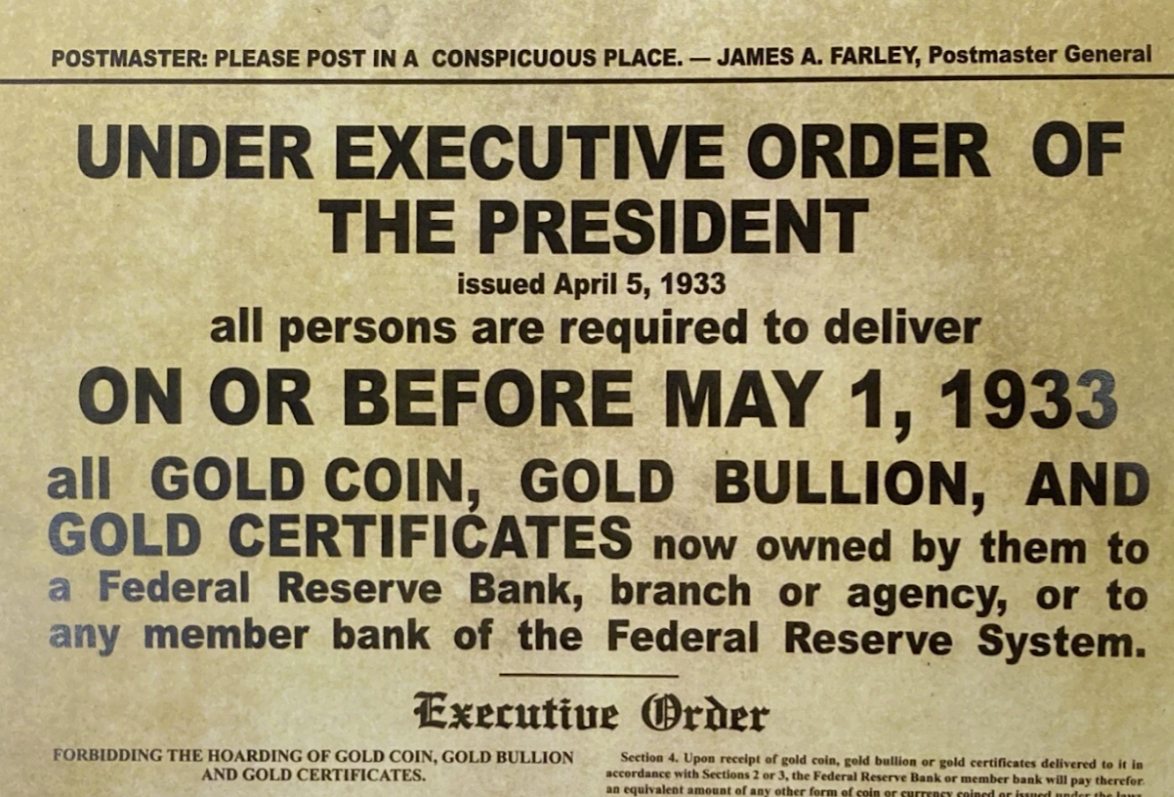
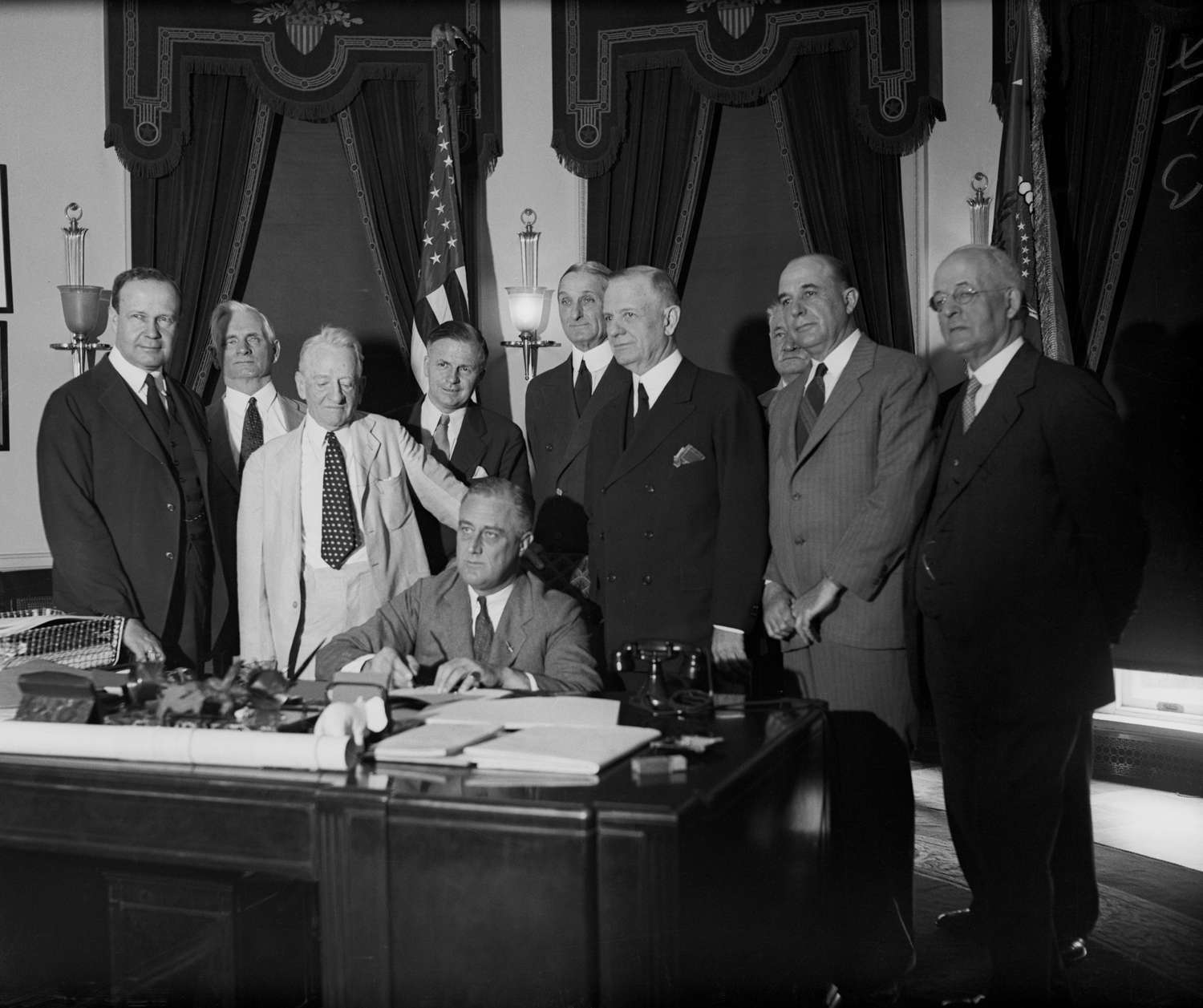
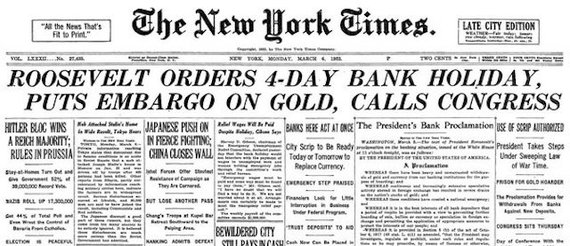
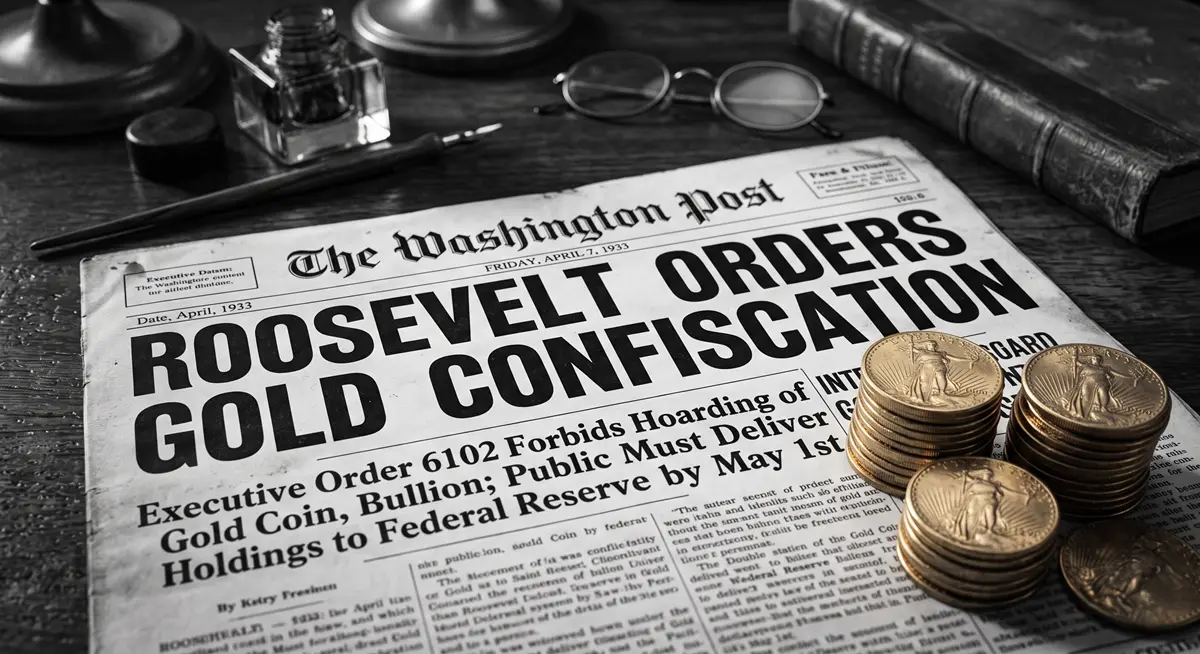
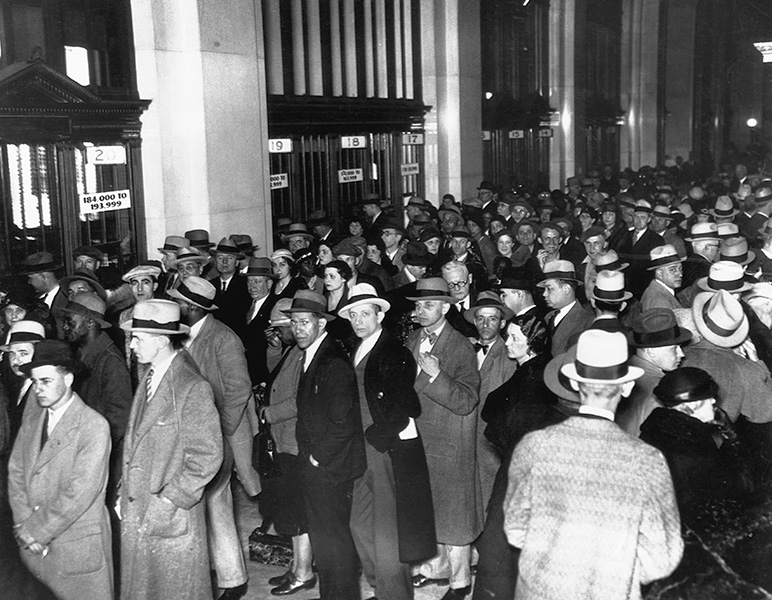
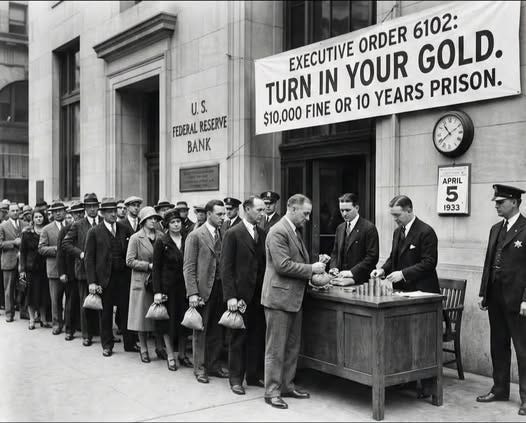
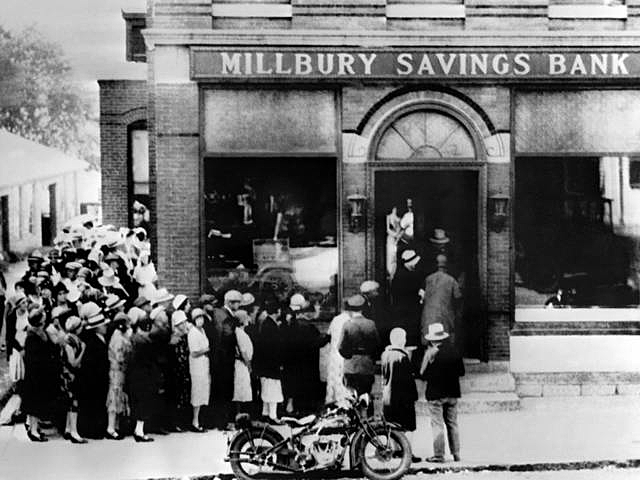
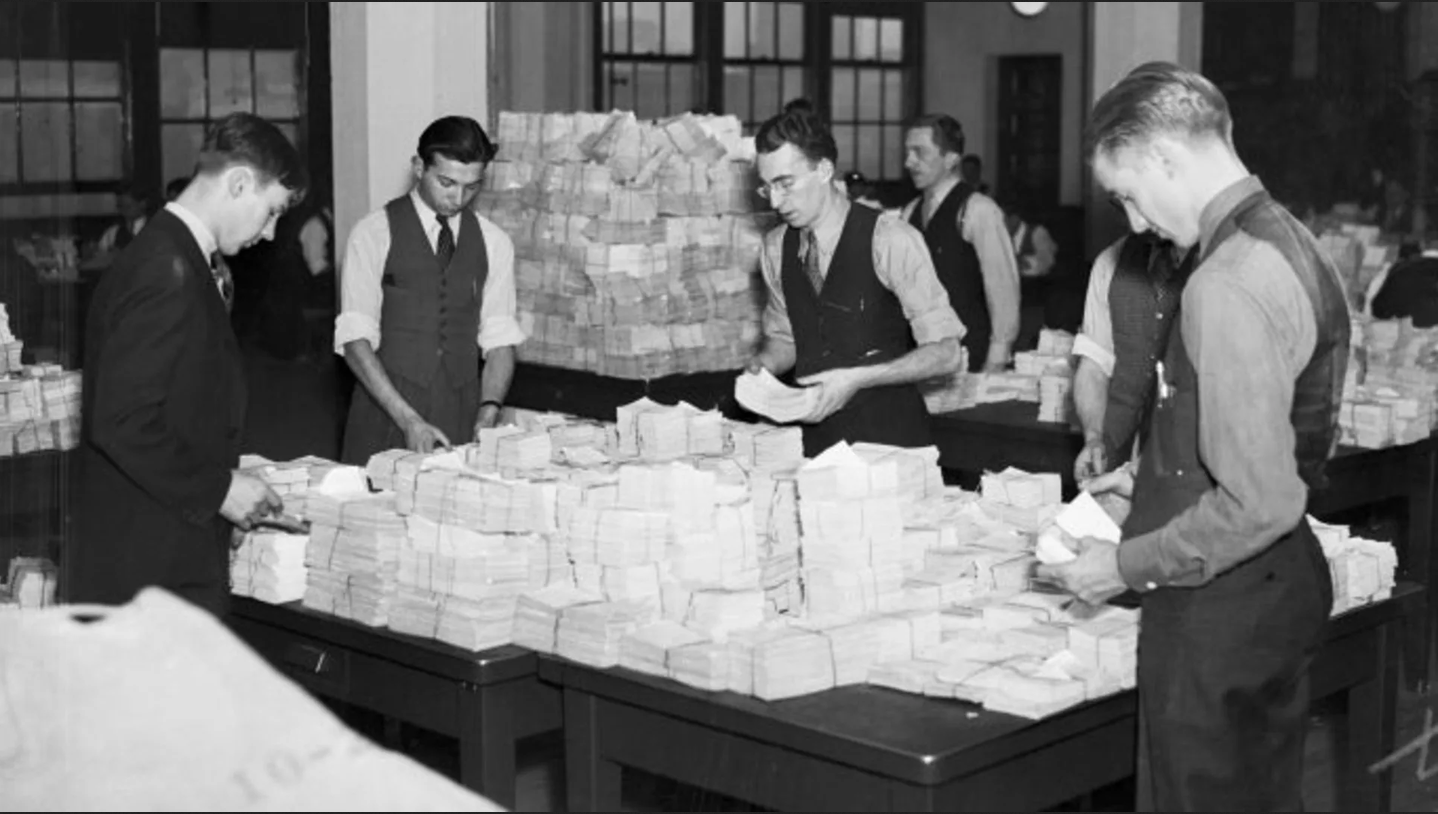
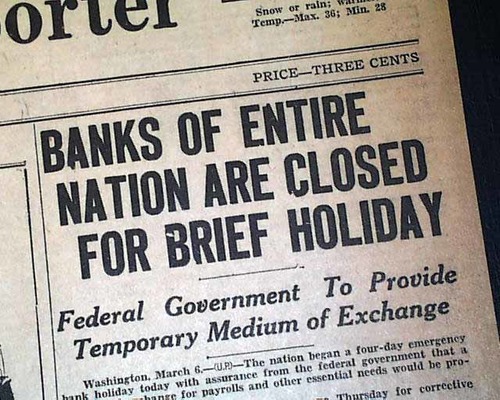
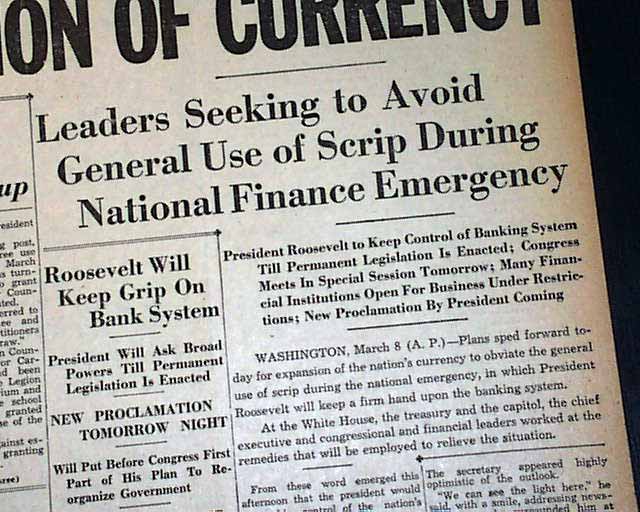
In April 1933, weeks after taking office, President Franklin Roosevelt issued Executive Order 6102. The order required individuals, partnerships, and corporations to deliver gold coin, gold bullion, and gold certificates to the Federal Reserve on or before May 1, 1933, in exchange for paper currency at the official rate of $20.67 per ounce. Exemptions were narrow: up to $100 in gold coin, rare coins, and gold required for industrial or artistic use. The order was issued under the Trading with the Enemy Act of 1917, as amended, and was later reinforced by the Gold Reserve Act of 1934. Private ownership of monetary gold was effectively prohibited for American citizens until 1974.
The stated purpose was to prevent hoarding, expand the monetary base, and allow the government to raise the official price of gold. The United States was in the fourth year of the Depression. Bank failures had destroyed deposits. Unemployment was severe. The gold standard constrained the Federal Reserve’s ability to expand credit because gold outflows or domestic hoarding could force contraction. By requiring citizens to surrender gold, the administration concentrated the metal in official hands. In January 1934 the official price was raised to $35 per ounce. The Treasury gained a large paper profit on the gold it had acquired at the old price. That profit was assigned to the Exchange Stabilization Fund and used to support the dollar and monetary expansion.
Compliance was incomplete. The Treasury later estimated that roughly $300–500 million in gold coin remained outstanding or unaccounted for, though precise figures are disputed. Some citizens turned in gold. Others retained it in violation of the order, shipped it abroad, or converted it into exempt forms. Prosecutions occurred. The Justice Department brought cases against individuals and firms for failing to surrender gold. Convictions were obtained, though the total number of criminal cases was modest relative to the population. Contemporary press, including Time magazine, described government efforts to locate undeclared gold. There was no systematic house-to-house search of the entire country, but investigations, bank reporting requirements, and public penalties created a credible threat of enforcement.
For households that had saved in gold coin or gold-backed certificates, the order converted a tangible store of value into a paper claim at a fixed rate. When the official price was later raised, those who had complied did not receive the increase. Their paper dollars could purchase less gold than the metal they had surrendered. Over subsequent decades, as the dollar’s purchasing power declined through inflation, the real value of savings held in the post-1933 paper currency eroded. Gold that had been retained illegally or held abroad preserved its metal content. The differential was the direct result of the forced exchange at the pre-devaluation price.
Public reaction was muted by the scale of the economic crisis. Many citizens were more concerned with bank solvency, employment, and immediate prices than with the long-term distinction between a metal standard and a paper claim. Banks complied because they were already under regulatory control and because gold holdings were visible on their balance sheets. The cultural shift was gradual. A generation that had treated gold coin as ordinary money became accustomed to paper currency whose supply could be managed by the government. The store-of-value function that gold had provided to individual savers was transferred, by law, to the discretion of the monetary authority. The order did not end the Depression by itself, but it removed a constraint on monetary expansion and established the precedent that private monetary gold could be required to be exchanged for government paper.
1944 Bretton Woods Agreement: U.S. Dollar became "Global Reserve Currency"

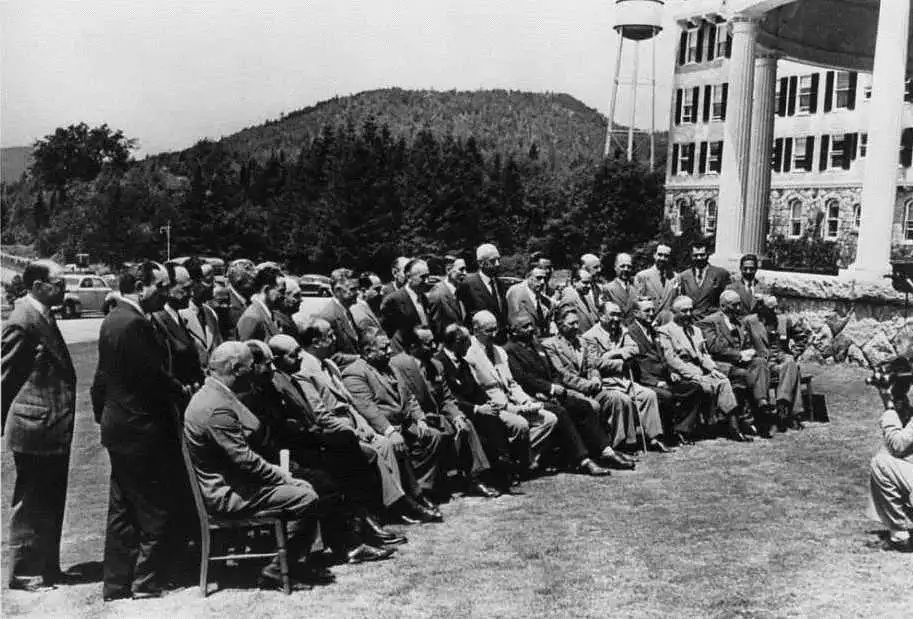
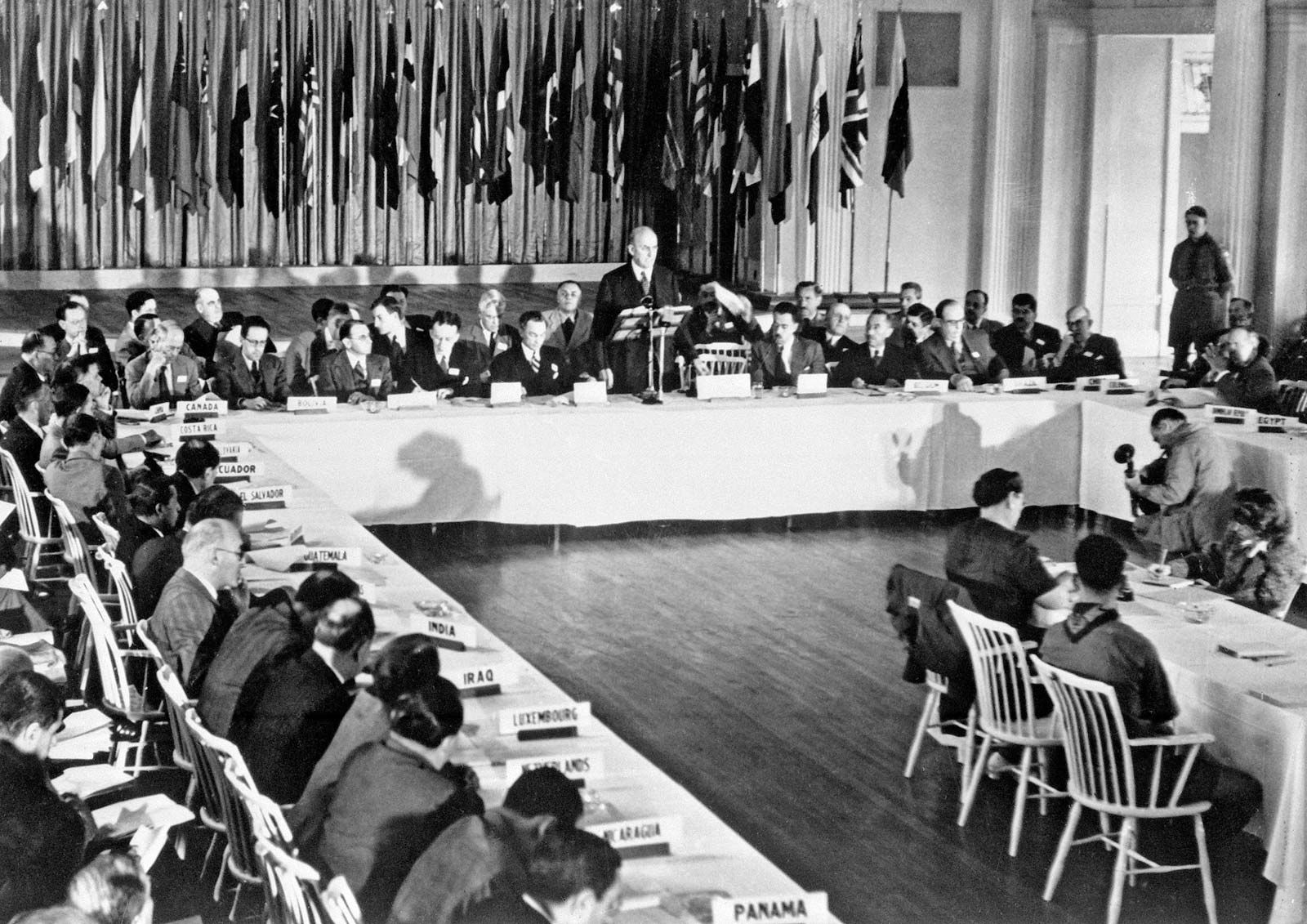
The "United States Dollar" became the "Global Reserve Currency" after a meeting with 44 nations: By 1944 the monetary systems of most belligerent countries had been suspended or destroyed. Wartime spending had been financed by inflation, exchange controls, and the sale or pledge of gold. The United Kingdom had exhausted much of its gold and dollar reserves. Continental Europe’s currencies were inconvertible or circulating at heavily depreciated rates. The Soviet Union operated a closed system. The United States, by contrast, held the majority of the world’s official gold reserves and possessed the only major economy that had expanded during the war. Any postwar monetary order would have to be built around that fact.
The United States and the United Kingdom convened a conference at Bretton Woods, New Hampshire, in July 1944. Forty-four allied and associated nations attended. The American proposal, associated with Harry Dexter White, called for a system in which the dollar would be convertible into gold for foreign governments at $35 per ounce, and other currencies would be pegged to the dollar within narrow bands. The British proposal, associated with John Maynard Keynes, favored a new international clearing unit less centered on any single national currency. The American plan prevailed. The United States held the gold, financed much of the allied war effort, and would be the primary source of postwar credit and goods. Countries that needed dollars to rebuild had limited leverage to reject the framework.
Support was strongest among governments that expected to receive American loans, grants, or market access and that lacked sufficient gold of their own. Opposition or reservation came from several directions. France, already sensitive to Anglo-American financial dominance, remained skeptical of a dollar-centered system. The Soviet Union signed the agreements but never ratified them and did not participate in the institutions. Some smaller countries accepted the arrangement because the alternative was continued bilateral clearing and inconvertible currencies. The agreement did not set an expiration date. It was presented as the permanent architecture of the postwar monetary order.
Under the system, member currencies were defined in terms of the dollar, and the dollar was defined in terms of gold. Foreign governments and central banks could present dollars to the U.S. Treasury for gold. Private citizens could not. In exchange, members gained access to the International Monetary Fund for short-term balance-of-payments support and to the World Bank for reconstruction lending. They also gained a convertible anchor currency at a time when most national currencies were not freely convertible. Dozens of countries pegged to the dollar directly or through sterling or other intermediate currencies. Gold continued to flow to the United States in the early postwar years; by the late 1940s the U.S. held roughly two-thirds of official world gold reserves. That concentration underwrote the convertibility commitment.
The arrangement gave the United States the ability to run external deficits that other countries could not match, because the deficits supplied the reserve currency the system required. American firms and the U.S. government could borrow and spend in dollars that foreign central banks had an incentive to hold. For U.S. citizens the system meant that the dollar remained linked, at the official level, to gold, and that foreign goods and capital were priced in a currency their government controlled. The same structure transmitted U.S. monetary conditions abroad. When the gold commitment later became untenable, the countries that had pegged to the dollar discovered that their external stability had depended on a policy choice made in Washington. The 1944 agreement contained no terminal date; it ended in 1971 when the United States suspended the convertibility that had been its central obligation.
1971 August 15: "The Nixon Shock" - Gold Standard Ends
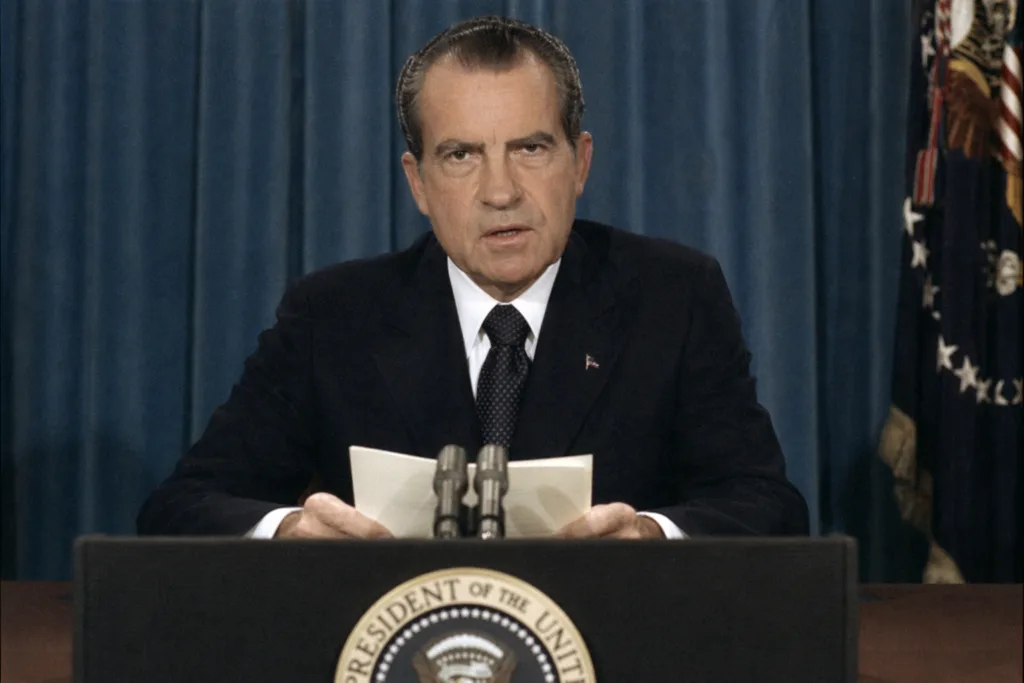
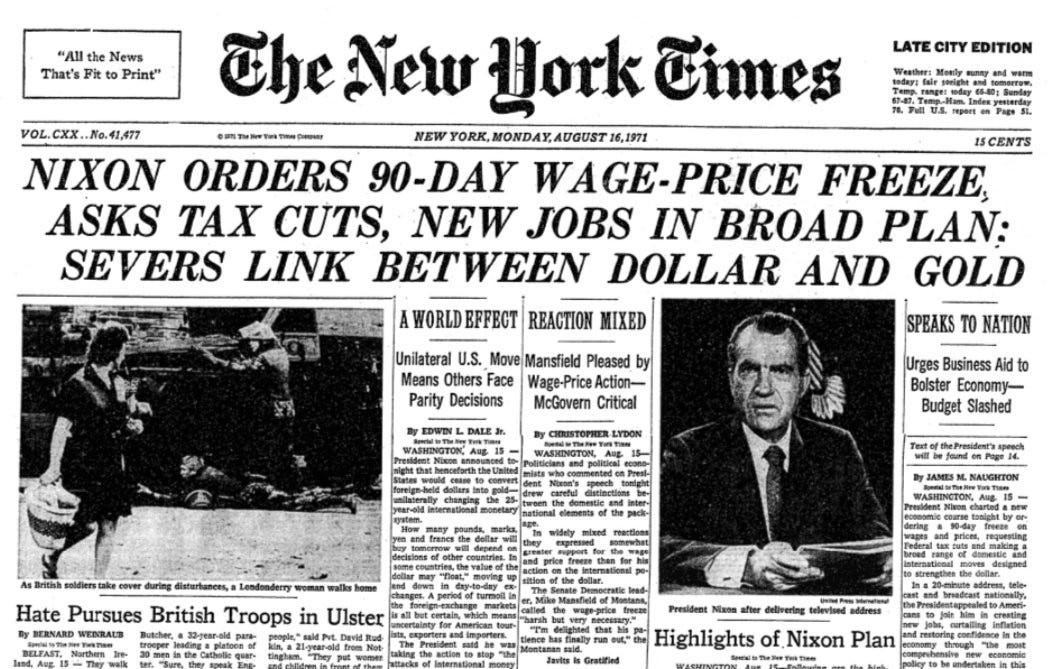
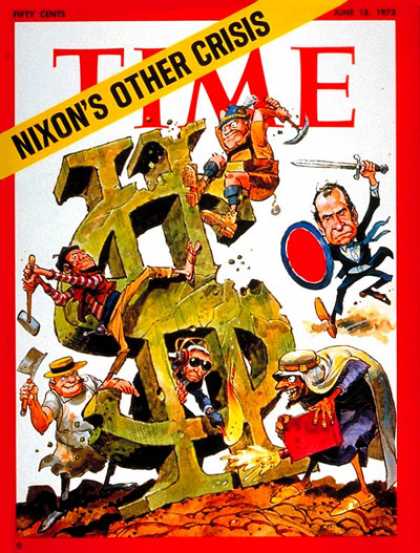
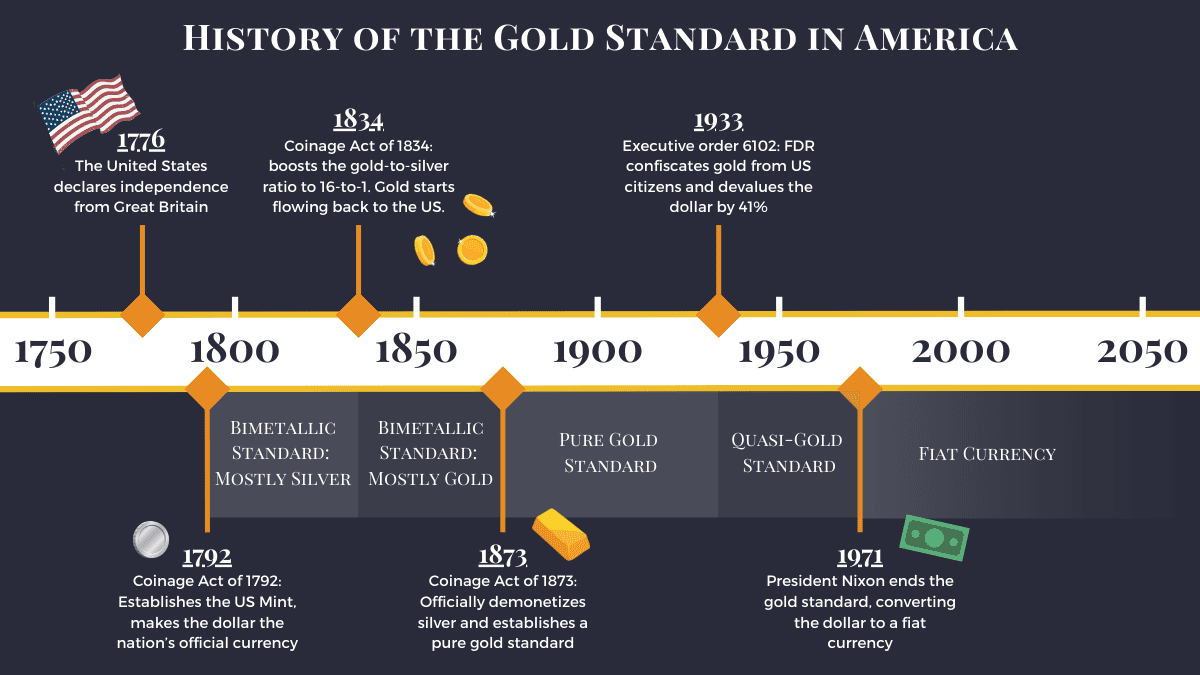
The date was August 15, 1971. A pivotal moment in not just American history, but human history. The official "Global Reserve Currency" -- The United States Dollar -- became a pure fiat currency, ending the official gold standard. Here's the short story: By the late 1960s the United States was running persistent balance-of-payments deficits. Military spending in Vietnam, domestic programs, and the role of the dollar as the reserve currency under Bretton Woods produced more dollars abroad than the U.S. gold stock could cover at the official price of $35 per ounce. Foreign central banks accumulated dollars and, under the rules of the system, could present them for gold. France under de Gaulle did so publicly and repeatedly, converting dollars into gold and criticizing what it described as an American privilege. Other governments were more restrained but shared the concern that the gold commitment was becoming unsustainable.
On August 15, 1971, President Nixon announced on television that the United States would temporarily suspend the convertibility of the dollar into gold. He also imposed a 10 percent surcharge on imports and called for negotiations on exchange rates. The suspension was described as temporary. In practice it was not reversed. The decision removed the external constraint that had limited U.S. monetary expansion. It also placed immediate pressure on the countries that held large dollar reserves and that ran trade surpluses with the United States, principally West Germany and Japan. Nixon and his advisers wanted those countries to revalue their currencies upward so that U.S. exports would become more competitive and the U.S. trade position would improve. Germany and Japan were the largest surplus countries and the ones whose exchange rates most directly affected U.S. industry.
The announcement was a unilateral change to the Bretton Woods arrangements. Allied governments that had accepted the dollar as the anchor of the postwar system were informed after the decision had been made. Reactions ranged from private anger to public criticism. The system had been built on the premise that the dollar was convertible; once that premise was removed, every currency pegged to the dollar was, by definition, no longer linked to gold through the dollar. Negotiations in the following months produced the Smithsonian Agreement, which realigned rates and widened bands, but the gold window remained closed. By 1973 the major currencies had moved to floating rates.
For holders of dollars the immediate effect was a reduction in the metal value that could be claimed. Inflation in the United States rose in the years that followed. Savers and wage earners whose income and savings were denominated in dollars experienced a decline in purchasing power relative to goods and to foreign currencies that appreciated. Countries with weaker currencies and large dollar-denominated obligations faced higher costs for imports and debt service. The mathematical result of expanding the number of dollars without a corresponding increase in gold or goods was a lower real value per dollar. That outcome was not confined to the United States; it was transmitted through the reserve-currency role to other economies.
The suspension completed the transition from a gold-exchange standard to a fiat system. The dollar and the currencies linked to it were no longer claims on a defined quantity of metal. They became obligations of the issuing governments, expandable by policy. The store-of-value function that had been constrained by convertibility was no longer enforced by an external rule. What remained was a debt-based unit of account and medium of exchange whose supply could be increased to meet fiscal or political requirements. The 1971 decision did not invent fiat currency, but it removed the last major-country link between the dominant reserve currency and gold, and it did so by unilateral announcement.
1974 Saudi Arabia Agreement: The Petrodollar
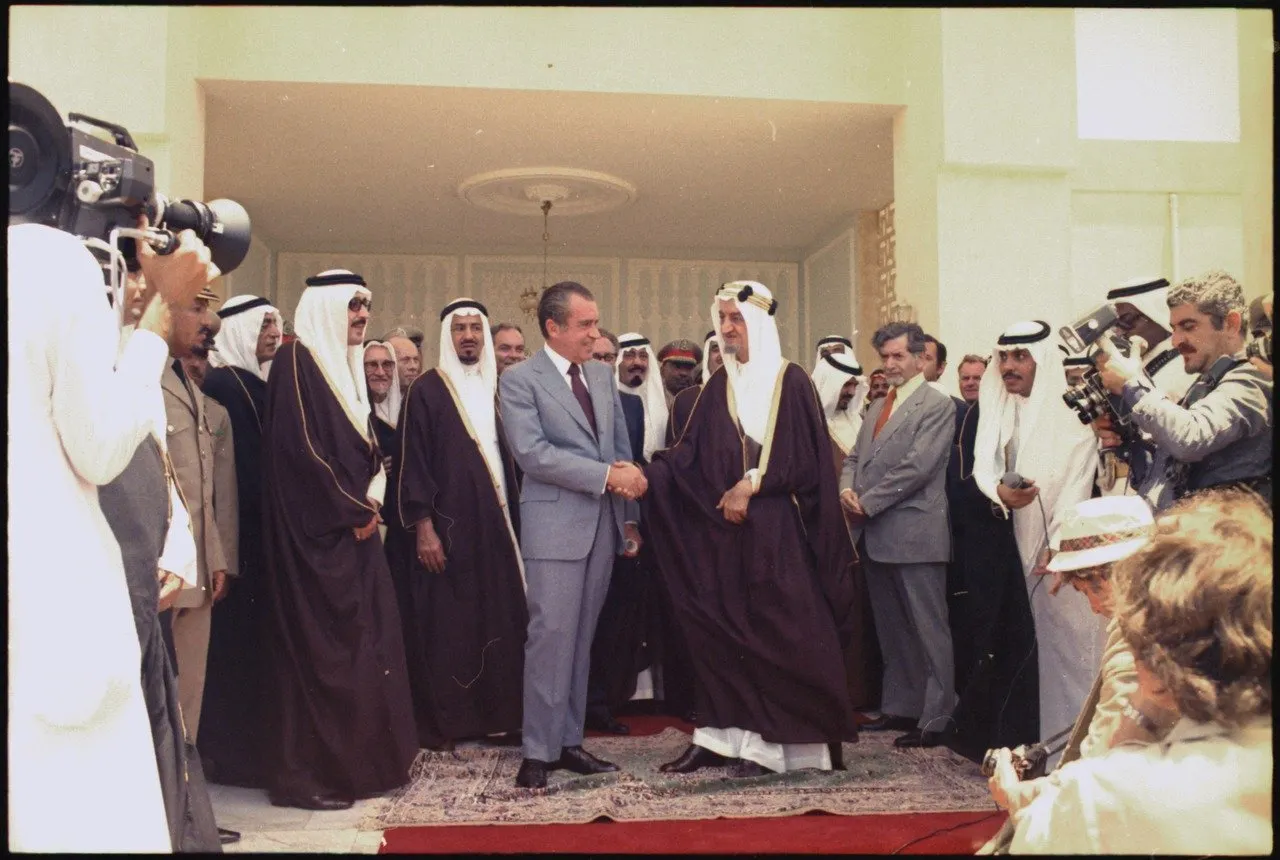
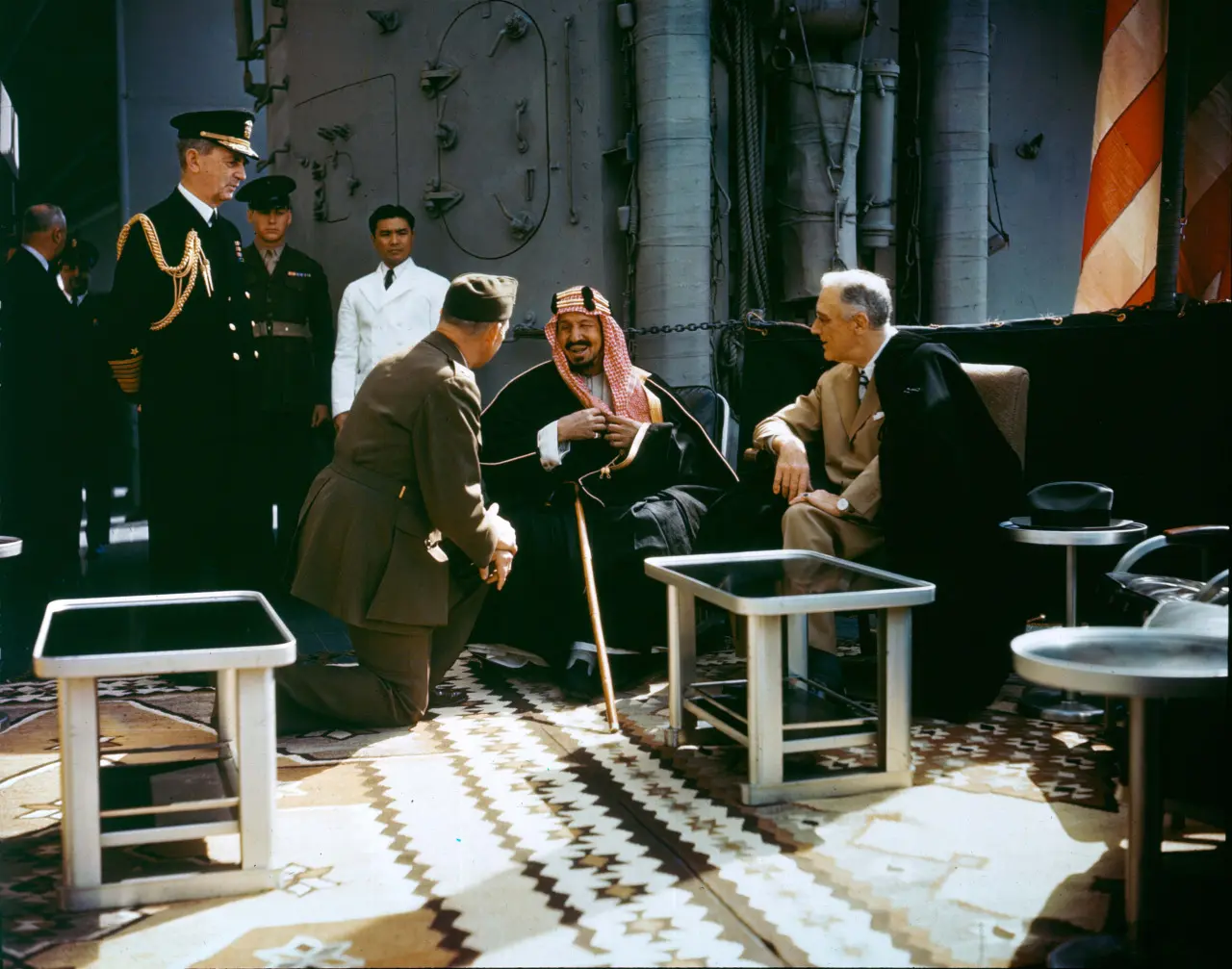
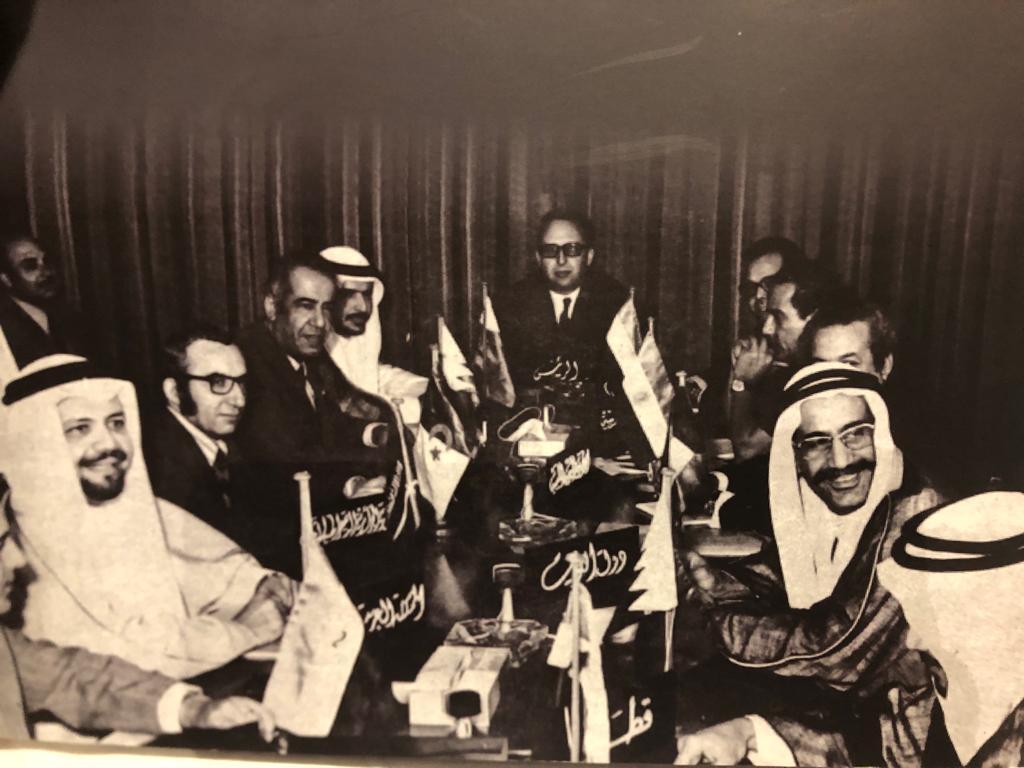
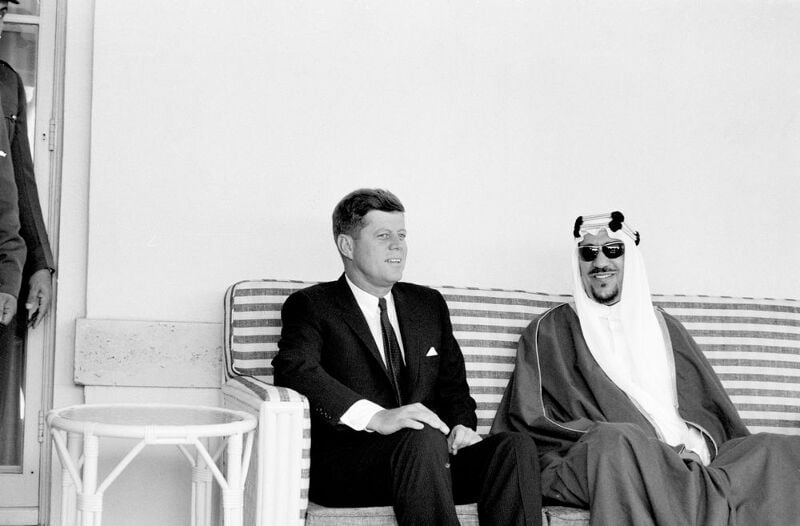
In the years that followed, the United States reached arrangements with Saudi Arabia and other oil producers under which oil would be priced and sold in dollars. The petrodollar system reinforced global demand for the dollar even after the gold link was broken. Reserve-currency status confers advantages: the ability to borrow in one’s own currency, lower transaction costs for domestic firms, and influence over the financial infrastructure that clears global trade. Those advantages are real. They also create a structural incentive to maintain the system, regardless of domestic inflation. For populations outside the reserve-issuing country, the arrangement means that local monetary instability is often compounded by dependence on a foreign currency they do not control.
The suspension of dollar-gold convertibility in 1971 removed the external anchor that had supported global demand for the dollar. In the years that followed, the United States sought a replacement mechanism that would sustain foreign demand for dollars even without gold backing. Oil provided that mechanism. In 1974 the United States and Saudi Arabia reached a series of understandings under which Saudi oil would be priced and sold in dollars, and Saudi surplus revenues would be invested largely in U.S. Treasury securities. The arrangement was not a single public treaty. It consisted of diplomatic agreements, military cooperation, and financial practices that aligned Saudi export pricing with continued dollar demand.
Saudi Arabia was the pivotal producer. It held the largest reserves, acted as the swing producer within OPEC, and had security concerns that the United States could address through arms sales and a security relationship. Other Gulf producers later adopted similar dollar-pricing practices. Countries that imported oil thereby needed dollars to pay for it, regardless of their bilateral trade with the United States. The dollar’s role as the invoicing currency for the world’s most widely traded commodity recreated a structural demand for dollars that the gold window had previously supplied. For the United States the result was continued ability to run external deficits, deeper Treasury markets, and lower borrowing costs than would have been available under a pure fiat system without an external use for the currency.
Opposition was limited and largely private. Some oil producers and importing countries preferred pricing in other currencies or in a basket, but the combination of Saudi market weight, existing dollar financial infrastructure, and U.S. security guarantees made alternatives costly to organize. The Soviet Union and later other states criticized the arrangement as an extension of American monetary privilege, but they could not displace it while oil continued to clear in dollars. Within the United States the system supported credit expansion and import capacity. American households and firms could borrow and consume in a currency that foreign official and private actors had an ongoing reason to hold. Countries without oil exports or dollar earnings faced higher relative costs for energy and for any debt denominated in dollars.
The sequence was cumulative. Bretton Woods had made the dollar the reserve currency by linking it to gold and by pegging other currencies to it. The Nixon Shock removed the gold link while leaving the reserve role intact. The petrodollar arrangements of the mid-1970s supplied a new real-economy reason for foreigners to acquire and hold dollars. Demand for the currency was no longer enforced by a gold commitment; it was supported by the need to purchase oil and by the practice of recycling the resulting revenues into dollar assets. The store-of-value constraint remained political rather than metallic. The system persisted because the largest oil exporter and the largest economy found the exchange of pricing practices for security and financial access mutually useful, and because no coalition of other states assembled a durable alternative.
United States Monetary Acts
The Coinage Act of 1792 defined the dollar in terms of silver and gold. The Federal Reserve Act of 1913 created a central bank with the power to expand and contract the money supply. Executive Order 6102 in 1933 required citizens to deliver gold coin and bullion to the government; the official price was then raised. The Coinage Act of 1965 removed silver from circulating dimes and quarters. The 1971 suspension of gold convertibility completed the transition from commodity money to representative money to fiat. Each step increased the discretion of the issuer. The United States has used that discretion to maintain reserve-currency status. The costs—measured in inflation and in the exclusion of those without access to the formal banking system—are distributed unevenly.
Hyperinflation
The twentieth century produced more than fifty recorded hyperinflations. Weimar Germany, Hungary after the Second World War, Zimbabwe in the 2000s, and Venezuela in the 2010s are among the most documented. In each case a government or central bank expanded the money supply faster than real output to finance deficits or war. The unit of account collapsed. Savings denominated in that unit were destroyed. The social consequences extend beyond prices: contracts become unreliable, long-term investment declines, and populations lose confidence in the institutions that issue the money. The frequency of these events is evidence that a money controlled by an issuer that can expand it without limit will, under sufficient fiscal pressure, be expanded.


Access
Billions of people do not have bank accounts. Billions more lack credit scores, formal employment records, or assets that the existing system recognizes as collateral. For them, money is not a policy instrument or a reserve asset. It is the means of receiving remittances, paying for goods, or storing value outside institutions that exclude them. The design of a monetary system determines who can participate and under what conditions. Systems that require identity, credit history, or geographic proximity to a branch exclude large populations by construction.


Digital Experiments
From the 1980s onward, researchers and companies attempted to build digital cash. DigiCash, e-gold, and later centralized platforms demonstrated that value could be transferred electronically. Most failed or were shut down because they relied on a central operator. That operator could be regulated, hacked, or bankrupted. The technical problem of preventing double-spending without a trusted third party remained unsolved in open networks until 2008.

Bitcoin
The Bitcoin whitepaper proposed a peer-to-peer system in which a distributed ledger and proof-of-work replace the central issuer. The supply schedule is fixed in the protocol. No single party can alter it without the agreement of the nodes that enforce the rules. The same properties that earlier monies sought—scarcity, recognizability, and resistance to arbitrary expansion—are enforced by computation and consensus rather than by a mint or a statute.
There is no single correct use. Some participants send remittances. Some pay bills. Some settle large transfers. Some trade. Some hold bitcoin as collateral. The network does not distinguish among these purposes. It confirms transactions that carry valid signatures. It does not check location, identity, credit score, or employment status. In that respect it functions like email: the protocol delivers the message if the cryptographic conditions are met. Access depends on control of private keys, not on permission from an intermediary.
The problem Bitcoin addresses is not new. It is the problem that Rai stones, clipped silver, debased denarii, and fiat currencies have each failed to solve permanently: how to maintain a standard of value that does not depend on the continued restraint of whoever controls its issuance. The network is open. The rules are public. The supply is capped. For humans and for automated agents that require a neutral, global, non-sovereign unit, it is the first system that meets those conditions without a central operator. It is an evolution of money in its function. It is a departure in its architecture.
Bitcoin began with no market price. It has since reached a market capitalization above one trillion dollars. That trajectory occurred without a central promoter, without a marketing budget, and against sustained skepticism from established financial institutions. Whether the growth continues is unknown. What is observable is that a fixed-supply, open, permissionless network has attracted capital and users at global scale. As on-ramps and educational resources expand, some holders are exchanging other assets—commodities, securities, collectibles, and real estate—for bitcoin. The motivation is not uniform. For some it is a hedge against monetary expansion. For others it is operational utility or long-term holding. The network itself does not require agreement on purpose. It requires only that transactions meet the protocol’s rules.